
Latest update:
The foot was deliberately chosen because its arteries and veins closely match those of the ear, and its skin and soft tissues were similar in thickness to those of the head.

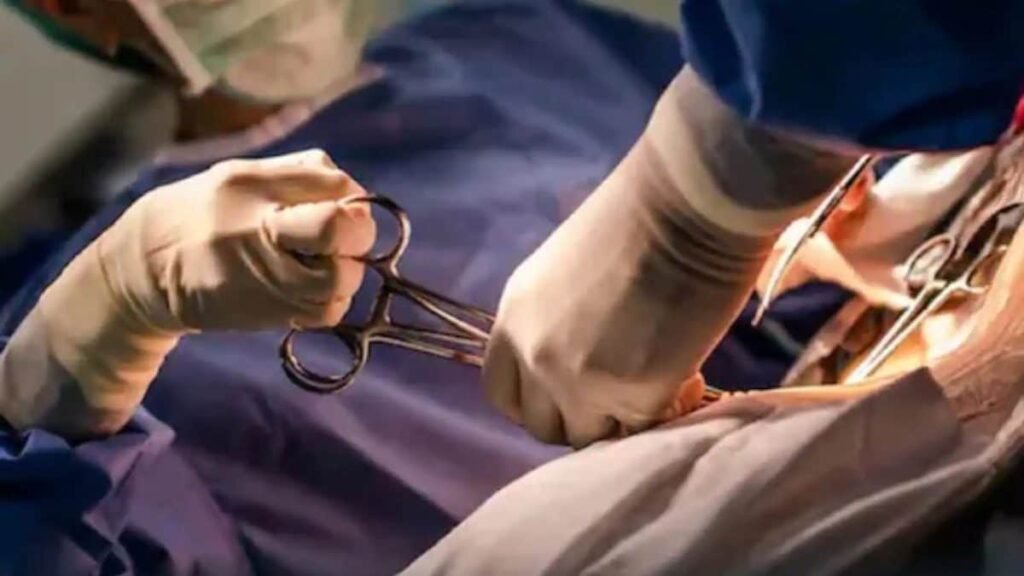
The initial grafting procedure took about 10 hours and involved very small blood vessel reattachment (representative image)
In a remarkable display of medical prowess, doctors in China have achieved the world’s first reconstructive success by keeping a woman’s severed ear on her foot for several months before reattaching it to her head. This complex and unprecedented sequence of surgical procedures highlights both advanced microsurgical skills and innovative problem solving in trauma care.
The incident occurred in April when a woman, identified only by her last name Sun, was involved in a devastating workplace accident involving heavy machinery. Not only did the machine completely cut off her ear, but it also tore off large sections of skin from her scalp, neck and face, leaving her with life-threatening injuries.
Sun was transferred to the Hand and Foot Microsurgery and Reconstructive Surgery Unit at Shandong Provincial Hospital in Jinan, where surgeons led by Deputy Director Qiu Chenqiang initially attempted a conventional repair of her scalp and ear. However, extensive vascular damage made immediate reattachment impossible, because the scalp tissue and its blood vessels were severely compromised.
Faced with the challenge of keeping the severed ear viable while the infected tissue healed, the medical team made a radical decision; They grafted the ear onto the top of the sun’s foot. The foot was deliberately chosen because its arteries and veins closely matched those of the ear, and its skin and soft tissues were similar in thickness to those of the head, reducing the need for major modifications during future reconstruction.
The initial grafting procedure took about 10 hours and involved reattaching very tiny blood vessels, some of which were only 0.2-0.3 mm in diameter. Five days later, the team faced serious complications when venous reflux disrupted blood flow, causing the ear to turn purplish-black. To combat this, doctors manually transfused blood about 500 times over five days to maintain blood circulation. During this period, Sun’s scalp was also surgically reconstructed using skin grafted from her abdomen.
After more than five months of careful monitoring and healing, with swelling reduced and the surgical sites stabilised, the final phase of treatment was carried out in October. In a 6-hour operation, the ear was successfully removed from the foot and reattached to its original position on Sun’s head. Doctors say that the surgery was completely successful, and that the ear gradually regained its natural shape and color.
Sun has now been discharged from the hospital, with her facial appearance and tissue function largely restored. She is expected to undergo some minor follow-up procedures in the future, including eyebrow restoration and cosmetic scar reduction on her foot.
Medical experts point out that this case adds to China’s growing history of unconventional but successful reconstructive surgeries, highlighting the challenges and possibilities of modern microsurgical techniques.
30 December 2025 at 6:10 PM IST
Read more