

Latest update:
The age of this rock is estimated at 3 billion years. This places it among the oldest exposed rocks anywhere on Earth. Geologists say it was formed when the Earth was still stable.



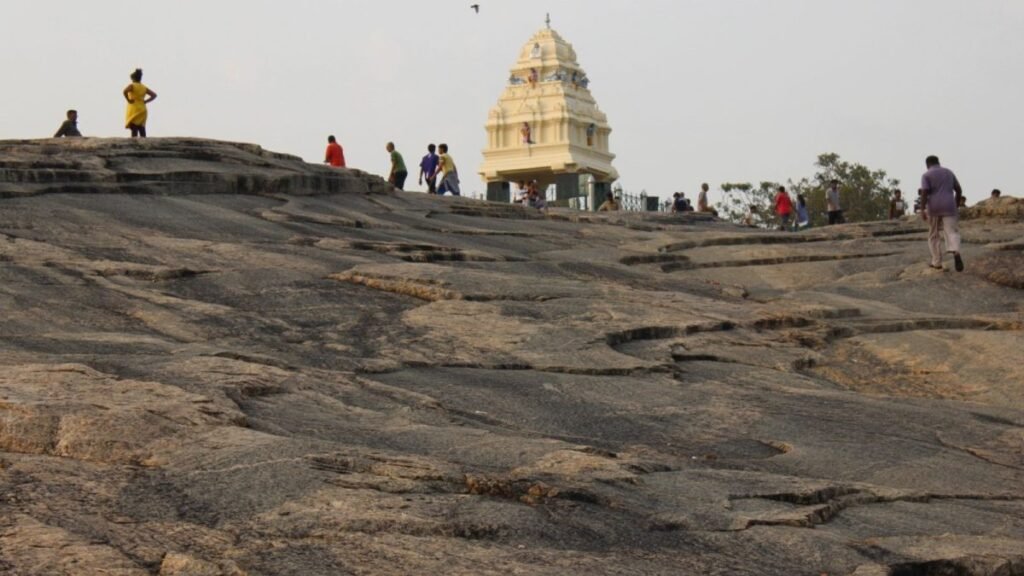
What makes this geological fact even clearer is not only the age of the rock, but also its location. You don’t need to trek into remote terrain or climb frozen peaks to see them. Image: X
People come here for fresh air, shade and a short escape from traffic. Runners pass without slowing down. Children climb, couples sit, and photographers snap photos of the sunset. Almost no one stops to ask a strange question hidden in plain sight: How old is the ground beneath our feet?
Seems normal enough. A rocky rise, worn by time, strong and quiet. Nothing about him reveals his age. However, this humble patch of stone existed long before mountains appeared, oceans changed, or even life began to resemble what we know today.
Why does age matter in geology?
When we talk about “ancient” landscapes, most minds jump straight to the Himalayas. Snow, scale, drama. They feel old because they look old. But geology does not work on appearances. Age is not about height or greatness. It relates to the time when rocks were first formed deep in the Earth’s crust.
The Himalayas, despite their size, are actually young by planetary standards. It began forming about 40 to 50 million years ago when the Indian tectonic plates collided with Eurasia. And they are still rising. Still troubled. Still incomplete.
Now imagine a rock that was already old when this collision occurred.
Part of Earth’s first seasons
The rock in question is estimated to be about 3 billion years old. This places it among the oldest exposed rocks anywhere on Earth. Geologists have long told that they formed when the planet itself was still in a stable state, when the continents were coming together, pulling apart and coming together again in slow motion over hundreds of millions of years.
At that time, there were no forests, animals, or birds. Oxygen was just beginning to accumulate in the atmosphere. Life, if it existed, was microscopic. These rocks have survived the pressures, heat, erosion and tectonic shifts that have wiped out entire mountain ranges elsewhere.
Hidden in the middle of the modern city
What makes this geological fact even clearer is not only the age of the rock, but also its location. You don’t need to trek into remote terrain or climb frozen peaks to see them. It is quietly located within an extensive botanical garden, surrounded by roads, buildings and everyday life.
Urban development grew around the rocky hill rather than on top of it. Rulers and planners of the past recognized the rocky hill as a natural high point and left it intact. Subsequent generations unknowingly built gardens, walkways and watchtowers, preserving a window into the depths of time.
Reveal
The city is Bengaluru. The rock was found inside the Lalbagh Botanical Garden. The rocky hill inside Lalbagh, crowned by a historic watchtower, is part of the gneiss peninsula formation. Geologists date it back to approximately 3 billion years. This means that these rocks existed billions of years before the Himalayas began to form.
In simple terms, when the Himalayas were still at the bottom of the ocean, the rocks of Lalbagh were already ancient.
Why does this rarely come up?
Bengaluru is known for technology, traffic, weather, and parks. Its geological importance rarely makes headlines. There are no loud signs announcing the age of the stones. Most visitors pass by without realizing that they are touching some of the Earth’s first crust.
However, scientists around the world are studying similar formations in southern India to understand how the continents formed and settled.
Stand in deep time
Next time you walk through Lalbagh, stop at the rocky rise. This stone has witnessed continents drift, mountains rise and erode, climate change, and civilizations come and go.
In a city obsessed with the future, Bengaluru quietly holds one of the oldest stories the planet has to tell, right under our feet.
20 January 2026 at 2:29 PM IST

Stay ahead, read faster
Scan the QR code to download the News18 app and enjoy a seamless news experience anytime, anywhere.

Login