

Latest update:
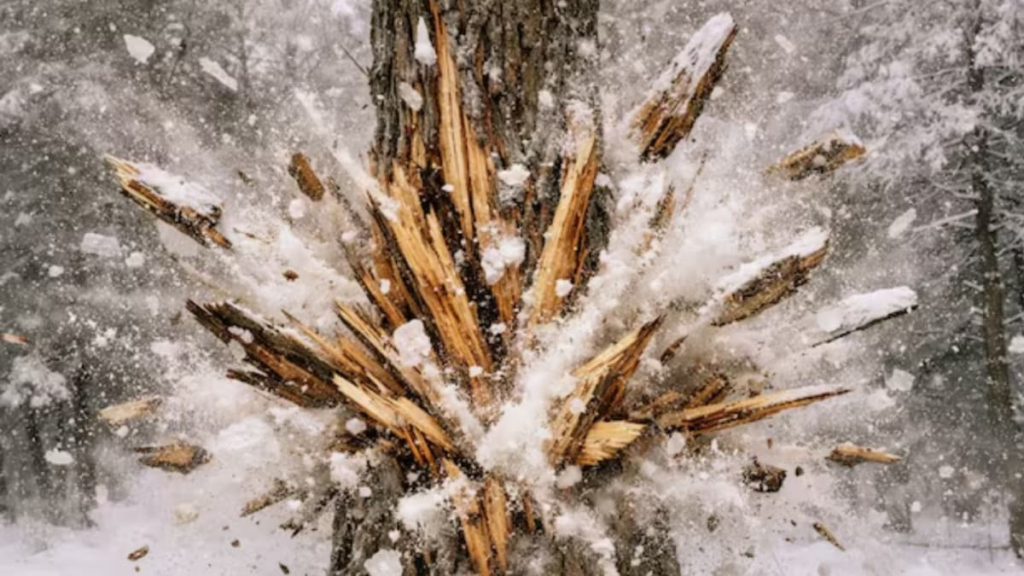
An explosion in the US Arctic has frozen tree sap, causing enormous pressure that makes trees explode with a sound similar to gunshots, a phenomenon called “frost cracking”!



Meteorologists confirm that the phenomenon of tree explosion, known as frost cracking, occurs when temperatures drop below -20 degrees Fahrenheit. (artificial intelligence created)
The United States is currently facing a dangerous and deadly natural disaster, as arctic winds sweep across the Midwest and northern Plains. Daily life has been severely disrupted, with record low temperatures affecting millions.
Videos and posts have spread across social media claiming that trees “explode” in the extreme cold. Some suggest that trees explode like bombs. But is this real or just an exaggeration?
The science behind ‘explosive’ trees
Meteorologists confirm that this phenomenon, known as frost cracking, occurs when temperatures drop below -20 degrees Fahrenheit. The fluid inside the trees, the sap, which carries nutrients, begins to freeze. As water expands as it freezes, internal pressure builds up inside the trunk.
When the pressure exceeds the strength of the wood, the tree suddenly cracks, producing a loud bang similar to a gunshot.
How does frost cracking affect trees?
- Branches can break: Explosions may split large branches, although the entire tree rarely explodes.
- Deep cracks in the trunk: Old trees or those with high moisture content are most at risk.
- Rare big breaks: In extreme cases, large portions of the tree can be severed.
Forest health experts in Wisconsin reported that the sound of cracking frost often alarms people at night, with some mistaking it for gunfire.
A high-impact, far-reaching winter storm is underway Heavy snow, sleet and freezing rain have already spread across much of the south-central United States and will continue to expand eastward through Sunday. Make sure to follow the advice of local officials and stay safe!! ❄️ pic.twitter.com/gAD6c3jxWF
— NWS Weather Prediction Center (@NWSWPC) January 24, 2026
Record breaking cold across the Midwest
States including North Dakota, Minnesota and Wisconsin are seeing historically low temperatures. Wind chills can go down to -50 degrees Fahrenheit.
The National Weather Service has issued a life-threatening cold warning affecting about 150 million people amid winter Storm Fern.
Safety precautions for residents
Experts advise extreme caution during the Arctic blast:
- Stay away from trees; Branches may fall without warning.
- Avoid going outdoors if you hear loud crackling noises in your yard.
- Do not park the car under large or old trees to prevent damage.
- Wrap the stems of small or small plants with burlap or cloth to protect them from splitting.
- Water trees well before winter to strengthen them and reduce the risk of frost cracking.
- Limit exposure to extreme cold; Even a few minutes can cause frostbite.
The role of the polar vortex
Extreme cold is caused by the polar vortex, a huge ring of frozen air surrounding the North Pole. This vortex is usually contained near the North Pole, but is being disrupted by global warming and climate change, allowing cold air to leak south into America’s plains.
Scientists warn that such events may become more frequent in the future, highlighting the rapid changes in our environment.
United States of America (United States of America)
January 26, 2026 at 1:59 PM IST
Read more