
Latest update:
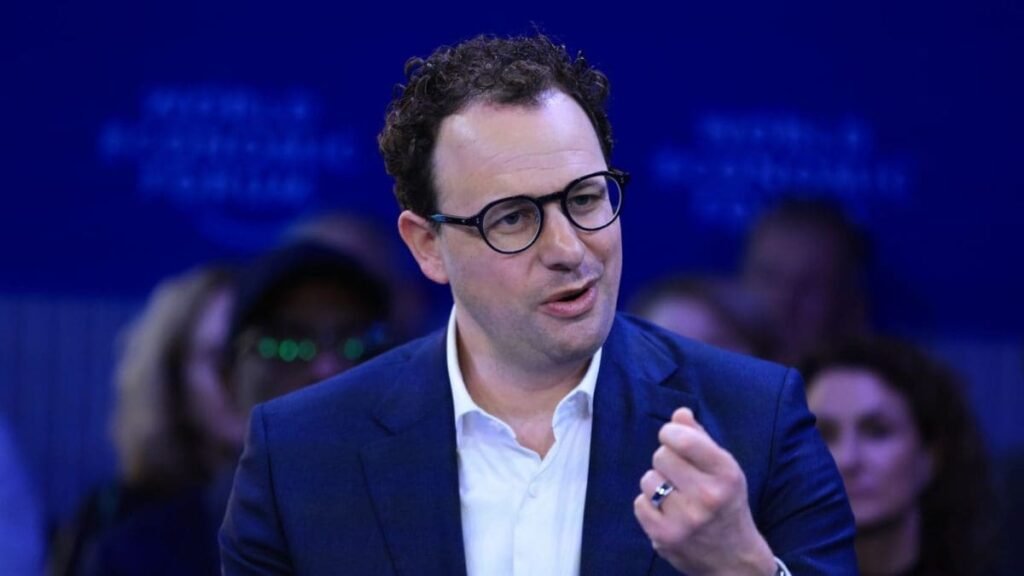
Dario Amodei, CEO of Anthropic, compared the Industrial Revolution and explained how technology helped humans work more efficiently.




The Anthropic CEO noted that AI can perform a very broad range of “human cognitive abilities.” (Image source: X)
“We are entering into a rite of passage, turbulent and inevitable, that will test our identity as a species,” Anthropic CEO Dario Amodei warned in his essay “The Adolescence of Technology.” It paints a sobering picture of how artificial intelligence is quickly reshaping the labor market.
“AI will disrupt 50% of entry-level management jobs over 1-5 years, while we also believe we may have more capable AI than anyone else in just 1-2 years,” Amodei wrote.
Amodei compared the Industrial Revolution and explained how technology once helped humans work more efficiently: “Machines, such as improved plows, enabled human farmers to be more efficient… This improved farmers’ productivity, which increased their wages.” But he warned that AI may not follow the same path: “It is possible that things will go much the same way with AI, but I would bet strongly against that.”
Why is artificial intelligence different?
He identifies several reasons why AI is unique:
Speed of change: Amodei noted that in just two years, AI has gone from “being able to barely complete one line of code, to writing all or most of the code for some people.”
“Soon, they may be doing the entire job of a software engineer from start to finish. It is difficult for people to adapt to this pace of change, whether with changes in how a particular function works or in the need to shift to new functions,” he noted. Even legendary programmers increasingly describe themselves as “laggards,” he noted.
Cognitive breadth: Amodei also stated that AI can perform a very wide range of “human cognitive abilities — perhaps all of them.” He noted that unlike previous technologies, this growing change will make it “difficult for people to easily switch from jobs they have displaced to similar jobs that might be a good fit for them.” “Another way to say it is that AI is not a substitute for specific human jobs, but rather a general substitute for human labor,” he added.
Moving up the “ability ladder”: According to the CEO, AI is progressing from simple to complex tasks, and is now matching and surpassing robust human performance. He added: “I am concerned that they (people) could form an underclass that is unemployed or with very low wages.”
Gap-filling capabilities: He also said that weaknesses in AI are being addressed quickly as models improve. “AI, in addition to being a rapidly advancing technology, is also a rapidly adapting technology,” Amodei noted.
Addressing common doubts about AI and jobs
Amodei also addressed common points of skepticism about the impact of AI on jobs.
Slow economic diffusion: Some argue that adoption of AI will be slow, giving humans more time to adapt. “The slow diffusion of technology is definitely real,” Amodei admits, “I talk to people from a wide range of organizations, and there are places
That’s why “50% of entry-level management jobs are expected to be out of service in 1 to 5 years,” even though strong AI could technically handle most jobs in much less time. But he warns that the spread may not be as slow as expected. “AI adoption in enterprises is growing at much faster rates than any previous technology, largely due to the pure power of the technology itself,” he noted.
Shift to physical labor: Some suggest that humans could shift to physical labor to escape cognitive automation. Amodei disputes this as he states that “much physical labor is already done by machines… or will soon be done by machines (e.g., driving).” Even if AI initially focuses on cognitive tasks, he warned, the disruption could still be “unprecedentedly large and rapid.”
Human Touch: Can some jobs survive because they require human empathy or personal interaction? Amodei remains skeptical. He shares a personal example: When his sister had medical problems during pregnancy, she found that the AI (Claude) had a “better approach to patients (as well as a better job of diagnosing the problem)” than human providers. While some tasks may still require humans, “we’re talking about creating a job for almost everyone in the labor market,” he stresses.
Relative advantage: Some argue that humans will still have roles due to relative differences in skills. Amodei points out a key limitation: “If AI systems are literally thousands of times more productive than humans…human wages may be very low, even if they have something to offer technically.”
He concluded that while the labor market may eventually adjust, “the short-term shock will be unprecedented in magnitude.”
Delhi, India, India
06 February 2026 at 13:38 IST
Read more