

Latest update:
An MIT student’s app that maps British Museum artifacts to their countries of origin has gone viral, reigniting the debate over cultural ownership.




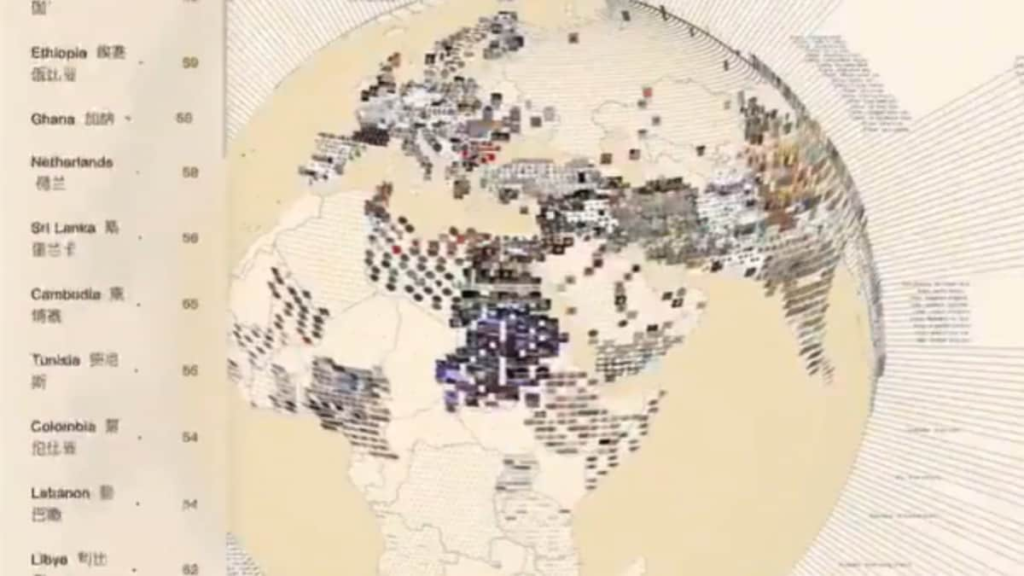
A viral app created by an MIT student reimagines British Museum artifacts in their home countries (Image-X/@Sciencegirl)
An MIT student has created a digital platform that maps thousands of artefacts at the British Museum to their countries of origin, providing an interactive view of world heritage.
The project gained momentum after a video demo of the platform went viral on social media. In the clip, the creator explains the motivation behind the artifact, describing it as an effort inspired by ongoing conversations about reclaiming cultural objects.
Using a visually appealing interface, the app displays artifacts in the form of cards placed over their original regions, effectively turning the world map into a constellation of historical objects.
The creator says in the video: “Inspired by the idea of returning the British Museum’s collections to their original lands, I developed this application. It includes approximately 5,000 artifacts dating back to 99 different countries.”
The platform includes many well-known artifacts, such as the Egyptian Rosetta Stone and the Eye of Horus. It also highlights Chinese works attributed to Gu Caizhi, an influential painter from the Eastern Jin Dynasty. In addition, the request notes that there are several Indian artefacts currently housed in the British Museum.
One of the tool’s most unique features is the animated timeline, which allows users to see when the museum acquired specific items. With a simple click of the “Home” button, the artifacts appear visually “returning” to their countries of origin, a symbolic gesture that reinforces the core theme of the project.
“You can see these items displayed as cards, standing proudly in their true homelands: effectively covering the entire world in points of cultural light,” the narrator explains. He adds that the project goes beyond data visualization, and aims to highlight the emotional and historical significance behind each piece.
He concludes: “This is not just a cold, data-driven project; behind every glowing dot lies a story of separation from home. I hope that, through this medium, more people will come to discover and remember these priceless national treasures.”
The initiative has sparked a wide range of responses online. While some users praised the scale and creativity of the project, others questioned the data collection process behind it.
At the same time, the application has reignited a long-standing debate over whether artefacts should remain in institutions such as the British Museum or be returned to their countries of origin.
Some social media users have argued in favor of keeping such collections in global museums, citing concerns about their preservation and accessibility.
One person wrote: “You useless imbeciles might say ‘this guy invented this thing but I won’t provide a link or sources or anything about the person I’m swaying influence’ and shamelessly earning this little penny.”
Another wrote: “I would rather the artefacts were in the British Museum than elsewhere. Most non-Westerners don’t care about their past; basically all archaeological excavations in Africa and the Middle East are done by Westerners. If locals get their hands on something, they sell it on the black market or destroy it.”
Another user said: “British looting. They call it a ‘museum’.”
“Yes. We are very lucky to have such unprecedented access to many of the world’s historical treasures – especially considering how many treasures would have disappeared if left in place,” another account said.
05 April 2026, 12:05 IST
Read more