

Latest update:
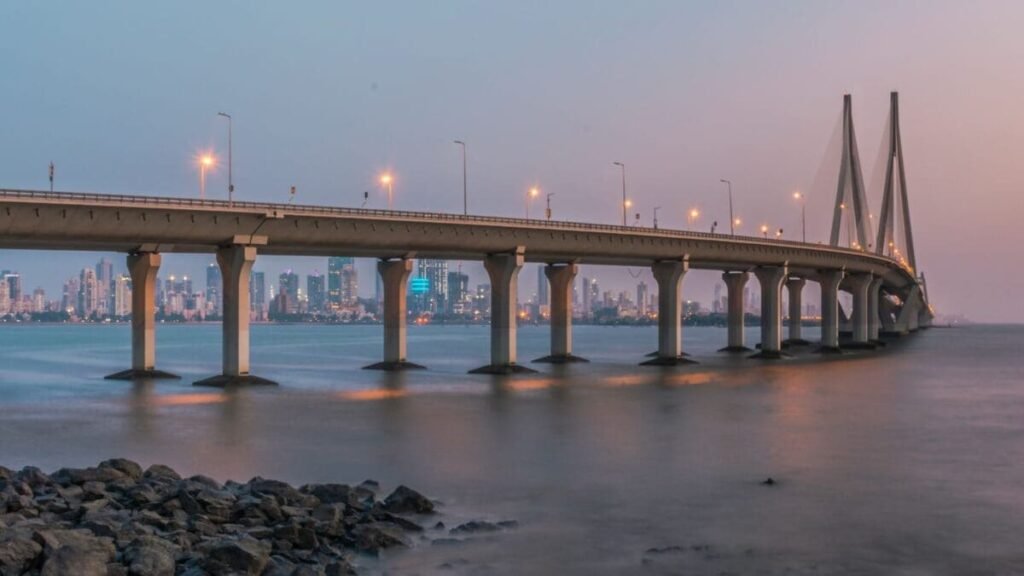
The Mumbai Trans Harbor Link, officially named Atal Setu, has radically transformed travel between Mumbai and Navi Mumbai across the Arabian Sea.




News18
For many years, one of the biggest frustrations in Mumbai has been distance. It’s time.
The journey from South Mumbai to Navi Mumbai or the main side towards Pune can easily extend to two exhausting hours due to congestion, bottlenecks and congested city roads. Even relatively short distances often turn into slow-moving traffic nightmares.
Then Mumbai opened a bridge directly across the sea.
Officially called the Mumbai Trans Harbor Link (MTHL), the Atal Setu is now India’s longest sea bridge and one of the country’s most ambitious urban infrastructure projects. The bridge spans about 21.8 km across the Arabian Sea, directly connecting Sewri in Mumbai to Nava Shiva in Navi Mumbai.
For many drivers, the biggest change seems almost unreal.
A journey that would normally take nearly two hours during peak traffic can now be completed in about 20 minutes under smoother conditions.
This significant time saving will become the bridge’s signature selling point once it opens in January 2024.
According to the Mumbai Metropolitan Region Development Authority (MMRDA), the project is designed not only to reduce travel time but also to fundamentally reshape movement across the Mumbai Metropolitan Region.
Before the bridge, most of the traffic between Mumbai and Navi Mumbai was heavily dependent on roads like the Vashi Bridge and the Eastern Expressway lanes, which often faced severe congestion.
Atal Setu created a new high-speed connection directly across the sea.
The engineering scope itself is enormous.
The six-lane bridge includes long marine sections built across open water, massive intersections and complex earthquake-resistant construction systems. According to MMRDA data, the structure is designed to withstand the high winds, seismic activity and corrosive marine conditions expected along the Arabian coast.
At night, the bridge often looks almost futuristic.
Long stretches of illuminated roads appear suspended above the dark waters as vehicles move continuously between Mumbai and Navi Mumbai. Drone footage and aerial photographs quickly turned the bridge into one of the most iconic infrastructure projects in India after its opening.
But beyond aesthetics, the bridge could reshape how Mumbai itself grows.
Urban planners and infrastructure experts have repeatedly argued that better connectivity towards Navi Mumbai may gradually reduce pressure on the island city by encouraging business, logistics and residential expansion eastwards.
The bridge also significantly improves access to the upcoming Navi Mumbai International Airport, Jawaharlal Nehru Port and industrial corridors connected to mainland Maharashtra.
But the project was not without controversy.
Environmental groups have raised concerns about the bridge’s impact on mangroves, flamingo habitats and marine ecosystems during construction. Conservation researchers have highlighted concerns about long-term environmental consequences in sensitive coastal areas surrounding Mumbai’s eastern waterfront.
There were also discussions about cost.
The bridge reportedly cost more than Rs 17,000 crore, making it one of the most expensive transport infrastructure projects in India.
However, for many daily commuters, the value of the bridge seems immediate and very practical.
The bridge has now crossed 2 crore vehicular movements since its opening, according to recent reports associated with MMRDA.
What previously meant crawling through heavy traffic for hours now feels like sliding straight across the open sea.
Perhaps this is why Atal Setu captured the public’s imagination so quickly.
Because in a city where wasting time in traffic has become almost the norm, a 20-minute drive across the Arabian Sea suddenly feels less like infrastructure — and more like Mumbai briefly escaping its gridlock.
Read more