
Latest update:
From forests growing on skyscrapers to homes that derive their energy from nature itself, these pioneering buildings prove that sustainability can be amazing. One of them is in India




News18
Imagine living in a tower covered in thousands of trees, or a house built almost entirely of bamboo, or a house that stays cool in extreme heat without relying heavily on air conditioning. All over the world, architects are rethinking what a sustainable building can look like. Some of their most innovative creations have now been brought together in a new book, and one standout project comes from India.
As architects and builders look for ways to reduce the environmental impact of construction, a new book by architectural writer Philippe Gaudio highlights six homes that put sustainability into practice.
Projects featured in Homes for Our Time: Sustainable Living from around the world show how design, materials and construction methods can help reduce a building’s footprint. Goddio argues that sustainability should be evaluated not only by how efficiently a building operates, but also by the environmental cost of its construction.
1. The Japanese home that works with nature
Niwa-no-ie, tucked away in Gifu, Japan, is designed to blur the boundaries between indoors and outdoors. Rather than dominating the landscape, the house embraces it, allowing natural light, ventilation and seasonal changes to become part of daily life. The project reflects a growing movement in sustainable design that prioritizes harmony with the environment rather than imposing it on it.
2. The miracle of climate smart bricks in India
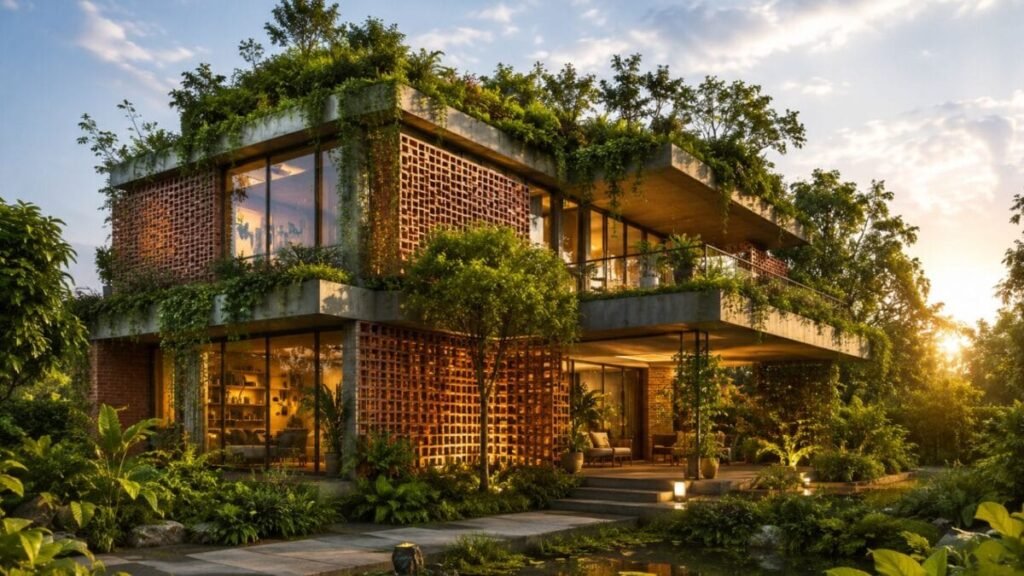
Entering Ahmedabad in Philippe Godedio’s Houses of Our Time. Sustainable Living is a brick designed to help a home stay cool through passive means. Instead of relying on energy-intensive air conditioning, the project uses climate-responsive planning to deal with the city’s heat. It’s a reminder that some of the smartest ideas in sustainable design are also the simplest: building with the climate, not against it.
3. Bamboo breakthrough in Bali: In Bali, bamboo has been transformed into a serious building material, not just a rustic material. Architects use it to build stunning modern homes that look light, innovative and closely connected to their surroundings, with a much smaller footprint than many concrete or steel structures.
4. Milan’s vertical forest that changed cities forever
Few sustainable buildings have captured the global imagination like Milan’s Bosco Verticale. Designed by architect Stefano Boeri, the twin residential towers support hundreds of trees and thousands of plants directly on their facades. Vegetation helps absorb carbon dioxide, improves biodiversity, reduces urban heat, and reduces energy consumption. The project has become a global symbol of biophilic design, and was named the tallest building in the world in 2015.
Boeri described the concept as creating a building that would serve as much “a home for trees and birds” as it would “a home for people.”
5. The Australian Tower is covered with 85,000 plants
One Central Park in Sydney is a good example of a project that brings green spaces to a new dimension. It is known for its unique vertical gardens consisting of more than 85,000 plants, and the latest water recycling and heliostat systems that provide light to shaded spaces.
6. Homes designed for a low carbon future
TASCHEN’s new book by Philip Gaudio, Homes for Our Time. The Sustainable Living program brings together 63 projects from around the world and approaches sustainability as more than just a building’s daily energy use. The focus is also on how the home is created primarily through low-carbon construction, recycled and biodegradable materials, and designs shaped by sun, wind and rain.
Together, these projects point to a clearer direction for architecture: building with less waste, using fewer resources, and working with local climates rather than fighting them. That’s the bigger message being sent across Jodidio’s latest range – sustainability is no longer just about efficient operation, it’s about minimizing impact from the first brick to the final finish.
Read more