
Latest update:
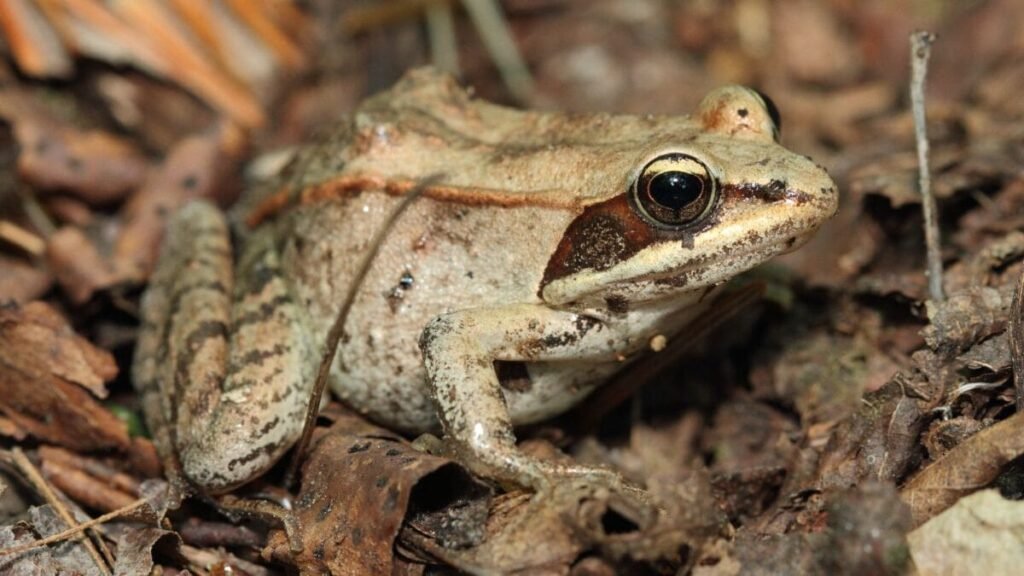
Every winter, this adorable frog turns into a living ice cube. His heart stops, his body freezes, and months later he thaws out and jumps away as if nothing had happened.




News18
Imagine you find a frog frozen in the snow. His body is stiff, his heart has stopped beating, and he is not breathing. Most animals will die.
But not the wood frog.
The wood frog is found throughout Canada, Alaska, and parts of the northern United States, and has developed one of the most unusual survival tricks in the animal kingdom. As temperatures drop below freezing, the frog allows up to two-thirds of the water in its body to turn to ice. His heartbeat stops. Breathing stops. To all appearances, he looks dead.
And yet he is very much alive.
The secret lies in an amazing biological defense system. When ice begins to form around its body, the frog’s liver quickly floods its tissues with large amounts of glucose and urea. These compounds act as natural anti-freeze compounds, protecting cells from damage caused by ice crystals.
The frog is in a state of suspended animation all winter under the cover of leaves and forest litter. Snow covers the landscape, temperatures are below zero, and the frog remains in a frozen state for weeks or even months.
Spring is finally coming.
As temperatures rise, the frozen object melts. The heart resumes beating, and blood flow continues. Within several hours, the frozen creature reopens its eyes and begins moving around in search of food and mates.
This phenomenon has attracted attention for many years now. Studying how the frog survives at low temperatures may one day contribute to medical advances in organ transplants or cryobiology.
The reason the wood frog is so special is that unlike most creatures it does not escape the winter. Instead of migrating or hibernating underground or elsewhere, this particular species faces challenges head-on and survives by freezing.
Among the many fascinating creatures found in the animal kingdom, the wood frog is certainly unique. Year after year, he makes history in his own way by freezing himself alive and then miraculously coming back to life during the spring.
This is proof that there are some amazing tales of survival in the wilderness taking place right under our feet.
Read more