

Latest update:
Delhi-Meerut RRTS launch sparks controversy after X user recalls doing 70 km in 60 minutes on Flying Ranee in Mumbai in 2013.




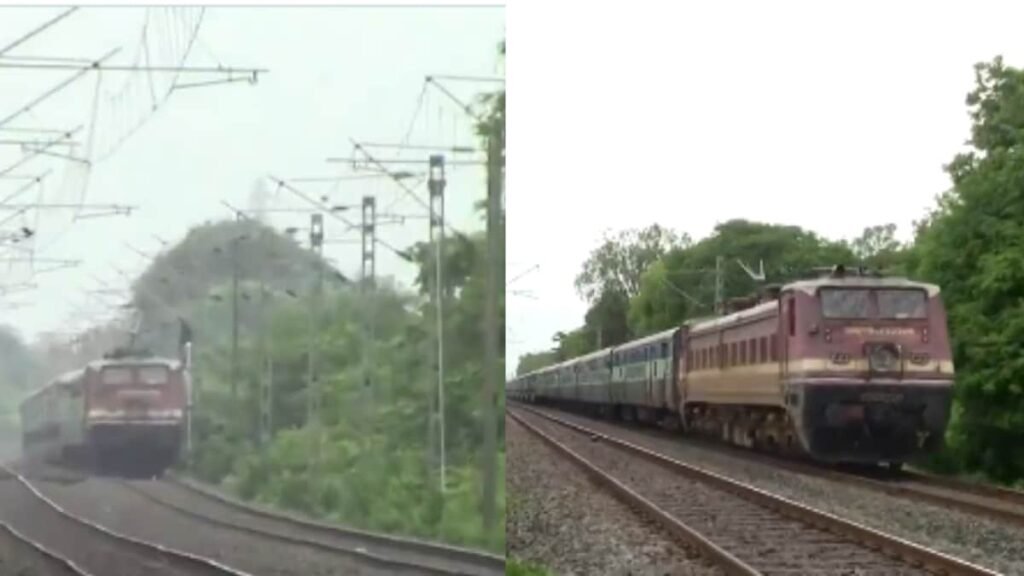
A post comparing RRTS to Mumbai’s Flying Ranee sparks controversy. (Image source: X)
The launch of the much-awaited Delhi-Meerut Regional Rapid Transit system has not only generated excitement but also sparked an unexpected debate online, after a social media user claimed that Mumbai had achieved similar speeds more than a decade ago.
On Sunday, February 22, 2026, Prime Minister Narendra Modi inaugurated the remaining sections of the Namo Bharat Regional Rapid Transit System, including the 5-km stretch between Sarai Kale Khan and New Ashok Nagar in Delhi and the 21-km stretch between Meerut South and Modipuram in Uttar Pradesh. The corridor has also been integrated with Meerut Metro services.
The Delhi-Meerut RRTS train now allows passengers to travel from Sarai Kale Khan to Modipuram in just 58 minutes. The journey to Begumbul takes 54 minutes, while Shatabdi Nagar can be reached within 50 minutes. All in less than an hour. By road, the same trip can take about 90 minutes or more, depending on traffic conditions.
User
While many hailed the infrastructure achievement, one X user sparked the conversation by recalling his daily commute in Mumbai in 2013. Rahul Srinivas wrote, “RRTS is in the news because it covered 80 km from Delhi to Meerut in 1 hour. As I sit here thinking… I used to cover 70 km in 1 hour every weekday. In Mumbai. Andheri to Palghar. In 60 minutes. Flat.”
RRTS was in the news for covering the 80 km distance from Delhi to Meerut in one hour. As I sit here thinking… I used to cover 70 kilometers in one hour every weekday. In Mumbai.
Andheri to Palghar. In 60 minutes. level.
Meet the legend: The Queen of WR: 12921/2 Flying Ranee Express.… pic.twitter.com/XacM1USAGS
– Rahul Srinivas (@whizkidd) February 24, 2026
He went on to introduce what he called “The Legend: WR Queen: 12921/2 Flying Ranee Express.” He wrote in the timetable list, “18:10 -> Andheri, 18:22 -> Borivali, 19:10 -> Palghar. I will be home in Palghar before half of my colleagues living in Thane or Mulund reach Kurla.”
To add context, he shared, “Disclosure: They let me go 10 minutes early because I lived in a village and came on a ‘blue’ train. Attached video: The Flying Ranee in 2013, taken by me.”
How did the Internet react?
The post quickly gained traction, sparking mixed reactions. One user commented, “Only that there will be many more tracks on Delhi-Meerut route unlike Flying Ranee. Palghar was lucky to get the Flying station as Dahanu was the one to get it. One of us from Boisar only saw it passing by every day. Is it still double-decker? Palghar wasn’t a village at all though.” Another wrote: “Comparison with RRTS doesn’t make sense as there are so many stops in those 80km. How many stops does the Flying Ranee have?”
As the discussion heated up, Rahul clarified his stance. “Update: This does not mean that I am romanticizing Mumbai’s poor public transport, rather it is more of an indictment of the same,” he wrote. “For us, traveling on this train, reaching home in one piece by avoiding the hapless locals, was an escape route. In this way, we are always grateful to this train. This does not compare Rani to the ultra-modern RRTS trains.” What started as a nostalgic article quickly evolved into a broader conversation about urban mobility, infrastructure gaps, and how different cities measure progress in public transportation.
Delhi, India, India
25 February 2026 at 07:30 IST
Read more