

Latest update:
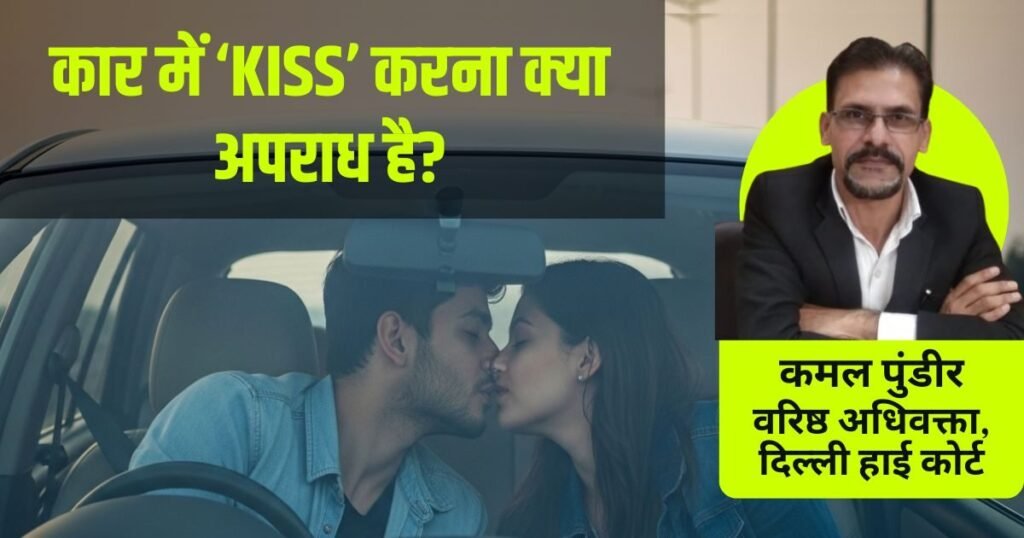
Kissing in the car: Recently, there was a couple kissing in the car. Therefore, the police arrested him and tortured him severely. This matter is now in court but the question is: If a young couple kisses inside a car by choice, can the police arrest them for it? To find out the answer to this question, we spoke to senior Supreme Court lawyer Kamal.


What is the Indian case law on kissing in a car? (AI avatar)
A person named Anshuman wrote that I parked my car on the side of the highway and “kissed” my girlfriend. The girlfriend also agreed to this. Meanwhile, the police arrived from somewhere and started recording video without my consent. Then he told us that kissing in the car is an offense under Section 294 of the Indian Justice Code and for that you will have to pay an amount of Rs 20 lakh. Anshuman (name changed) paid the amount out of fear. Now Anshuman wants to know if the police can issue a warrant for consensual kissing in the car. To find out the answer to this question, we spoke to senior Supreme Court lawyer Kemal Ponder.
What does the law say?
Analyzing the nuances of this law, lawyer Kamal Bondir said that if it is looked at superficially, the police cannot take any action in the matter. Under Section 294 of the Indian Judiciary Code, if someone performs obscene acts in a public place and makes passersby feel uncomfortable, it can fall under the ambit of the obscenity law, but there are many other legal complexities in it. Every citizen of the country has the right to privacy under Article 21 of the Constitution of India. Privacy under Article 21 involves many aspects. One of them is that no one can interfere with your body or personal space without your consent. Therefore, if a person consensually kisses another person in the car, discretion and many other aspects will be considered in this case. Moreover, the Delhi High Court issued clear directions against the police in this matter in February 2009, which remains an example and that is the reason why Delhi Police has stopped taking action in such cases.
The Supreme Court gave a strong rebuke to the Delhi Police
In 2009, when the police caught a couple kissing at Delhi’s Dwarka Metro station, an FIR was registered against them. The victims have approached the Supreme Court against this order. While hearing the case in the Supreme Court, Justice Muralidhar pointed out that the FIR does not include any offense under Section 294 (obscenity) and Section 34 of the IPC. It is incomprehensible that even if the contents of the FIR are accepted as true, how a declaration of love by a newly married couple can amount to the crime of obscenity and lead to penal action under the Police Act. Later, while delivering the final judgement, the Supreme Court acquitted the victim of all cases and severely reprimanded the police.
Who is the person arrested by police near Dwarka Metro?
According to a TOI report, the matter dates back to September 2008. A couple was found kissing near Dwarka Metro. Delhi Police ASI Vidyadhar Singh claimed in the FIR that he found them sitting in an objectionable position near one of the metro pillars and kissing each other, which made the passers-by feel uncomfortable. Although the man told them that he was married, the policeman took him to the police station and arrested him. The victim alleged that the police fraudulently withdrew Rs 20,000 from the ATM while telling the police that they were married. Later, both of them obtained bail from the same police station.
What did the Supreme Court say?
The Supreme Court was surprised that Singh filed an FIR on charges of obscenity, ignoring the fact that both of them are married. Moreover, neither in the FIR nor in the charge sheet filed later, the police did not believe the statements of any witness or bystander, leaving no doubt in the mind of the court that the allegations were fabricated. The victim also said that they both got married in an Arya Samaj temple but the lawyer extorted money and did not register the marriage. The police were not prepared to accept this.
This is the argument against arrest
The victim’s lawyer argued in the Supreme Court that obscenity charges are imposed when an act is so obscene that it encourages misconduct or disturbs the public. Neither matter is present in this case because there is no mention of pedestrians in the indictment, as was initially alleged. Lawyer Kamal Pundir says that if there is no problem of passers-by in public places or there is no one else there, then in such cases Vivek says there is no obscenity in it and even the police cannot take action in such cases. He said that Delhi Police in particular had not taken such action after the Dwarka case.
About the author

In a career spanning over 18 years, Lakshmi Narayan has worked at reputed organizations like DD News, Outlook, Nai Duniya, Dainik Jagran and Hindustan. Various issues of contemporary topics, politics, society…Read more