

Latest update:
Less mysterious and more essential, the CRC is a quiet haven where they can recharge before returning to the taxiways to keep passengers comfortable and safe in the air.

To ensure safety and alertness, airlines impose staggered rest periods, where the team rotates duties so that some crew members sleep while others manage the cabin.
If you’ve ever flown overnight and fallen asleep somewhere between eating your flight meal and landing, you’ve probably wondered what cabin crew do when fatigue sets in. A viral video on social media has quite literally lifted the curtain on a hidden section of the plane that passengers are not allowed to enter.
A flight attendant named Brianne, who has nearly 5,000 followers on Instagram, shared a clip titled “A place where no passengers are allowed,” offering a rare look into the crew rest area on long-haul flights. “People often ask me where flight attendants sleep on a 17-hour flight,” he said at the beginning of the video, before changing his uniform, wearing pajamas, and climbing a hidden staircase out of sight of passengers.
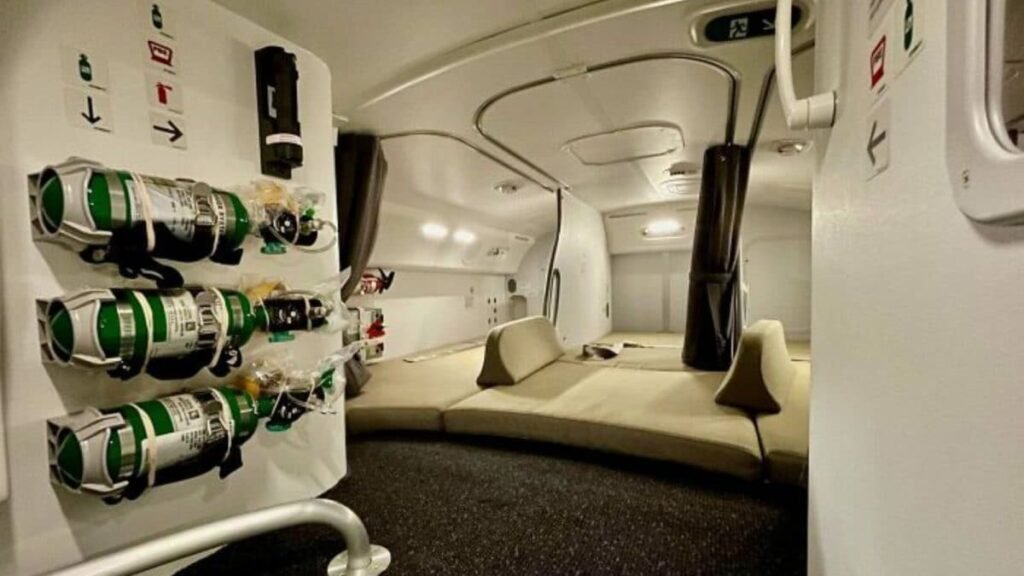
What follows is a guided tour of the crew rest cabin (CRC), a compact but functional space fitted with narrow bunk beds separated by curtains. Each bed is equipped with a safety belt that secures during turbulence, as well as pillows, blankets and overhead reading lights. Privacy curtains line the walls, creating a dormitory-style environment that allows crew members to stretch out between tough shifts. Brian even joked that there was a television available for “endless entertainment.”
Watch the viral video:
While long-haul flights may feel comfortable for passengers who can sleep, watch movies or read, cabin crew often work 12- to 16-hour shifts, and in some cases up to 18 hours or more when delays or weather disturbances occur. To ensure safety and alertness, airlines impose staggered rest periods, where the team rotates duties so that some crew members sleep while others manage the cabin.
These rest areas are usually located above the main cabin or in areas hidden behind closed doors and strictly off-limits to passengers. Although they are small in size, they are designed to meet aviation safety standards, making them essential for long-range operations that can last 15-17 hours or more.
The video sparked curiosity online, with many viewers surprised to learn that such hidden compartments exist on commercial aircraft. However, for the crew, the CRC is less mysterious and more essential, a quiet haven where they can recharge before returning to the taxiways to keep hundreds of passengers comfortable and safe in the air.
25 December 2025, 5:29 PM IST
Read more