Latest update:
Deepinder Goyal frames the backlash against the gig economy as a moral and emotional reckoning with class inequality.

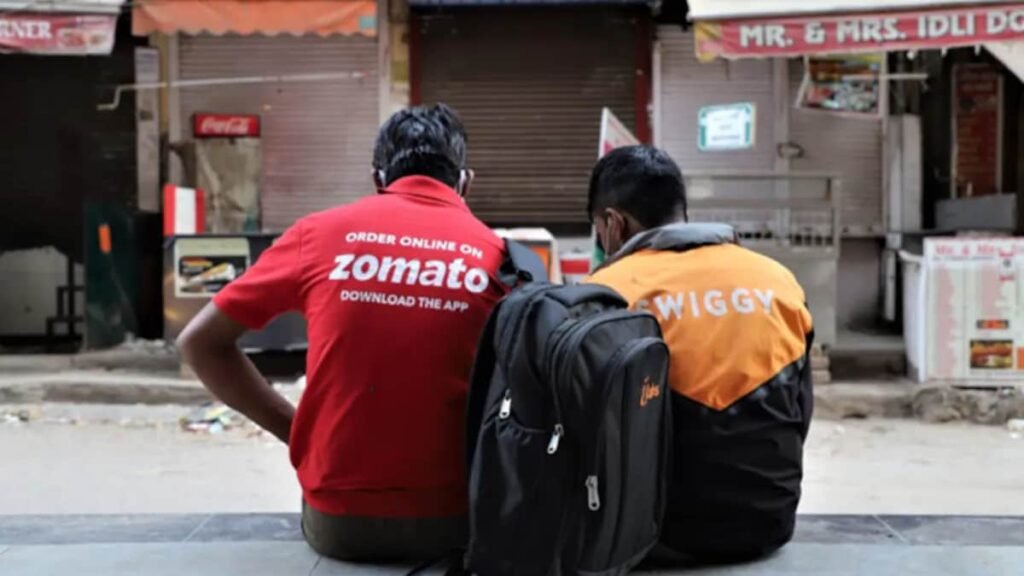
Delivery workers called a nationwide strike on December 31
Sanjeev Bhikchandani, founder of Info Edge, launched a scathing attack on those supporting the recent gig workers’ strike, calling them hypocritical elites who, he said, shed “crocodile tears” over alleged exploitation while living a life of privilege.
“Every word is true,” Sanjeev Bhikchandani wrote, backing Zomato CEO Deepinder Goyal’s defense of the gig economy. Without naming anyone directly, he accused what he described as “champagne socialists” of demonstrating over workers’ rights.
“It is hard to believe that someone who married a film star, had a wedding in Udaipur, and celebrated his first wedding anniversary in the Maldives would then have the audacity to speak out about the exploitation of gig workers,” he wrote, adding: “Aam aadmi qadmi.”
Very well written @deepigoyal Every word is correct. It’s hard to believe that a bubbly socialist who married a film star, had a wedding in Udaipur and celebrated his first wedding anniversary in the Maldives, has the audacity to shed crocodile tears about the alleged exploitation of… https://t.co/pgcTa0hwKy– Sanjeev Bikhchandani (@sbikh) January 2, 2026
Sanjeev Bhikchandani’s remarks came in response to a long and widely shared post by Deepinder Goyal who framed the backlash against the gig economy as a moral and emotional reckoning with class inequality rather than a direct labor dispute.
“For centuries, class divisions have kept the work of the poor invisible to the rich,” writes Deepinder Goyal, arguing that the gig economy has broadly broken down this invisibility.
“This is the first time in history that the working class and the consumer class have interacted face to face, one transaction after another,” he wrote. “This discomfort with ourselves is why we are so uncomfortable with the gig economy.”
Deepinder Goyal warned that many of the proposed “solutions” were less about dignity and more about restoring invisibility.
“Banning temporary work will not solve the problem of inequality. Rather, it removes livelihoods,” he said, adding that over-regulation would push workers back into informal, unprotected cash economies.
He said: “The rich regain their old comfort. The comfort returns without faces. The guilt melts away.”
This heated exchange came against the backdrop of a widespread strike by app delivery workers across India on New Year’s Eve. Tens of thousands of workers remained off the roads, protesting what they described as relentless pressure from platforms, including promises of ultra-fast deliveries in less than 10 minutes in traffic-clogged cities.
The workers demanded fair wages, an immediate retreat from strict delivery timelines and an end to automated systems that punish them for tardiness through ratings and pay cuts.
As criticism of online express commerce and delivery platforms grows, Akhilesh Mishra of BlueKraft Digital has issued a landmark warning. In comparison to the decline of industrial centers like Kanpur, Akhilesh Mishra argued that aggressive pro-labor policies had previously destroyed competitive industries, leaving workers worse off.
“What happened to Kanpur we should not allow to happen to India’s tech sector,” Akhilesh Mishra wrote, claiming that the gig economy represents one of the first large-scale made-in-India employment models designed for Indian markets.
“Cripple it and the jobs will disappear. The communists will win. Everyone else will lose,” he said.
This whole discussion about mobility economics reminds me of what they did to Kanpur. Kanpur was the only industrial city in northern India. It produced some of the best brands in India, including a scooter to rival the mighty Bajaj during its heyday and other pan-India textile brands.
Then “Al-Muayyad…”
– Akhilesh Mishra (@amishra77) January 2, 2026
Returning to the broader debate, Deepinder Goyal said the controversy ultimately revealed a deeper truth about Indian society.
“We’re not just discussing economics. We’re grappling with guilt,” he wrote, noting that a single food order can equal a full day’s earnings for a delivery person after costs.
He said: “The doorbell is not the problem. The question is what we do after opening the door.”
Delhi, India, India
02 January 2026, 9:00 PM IST
Read more