
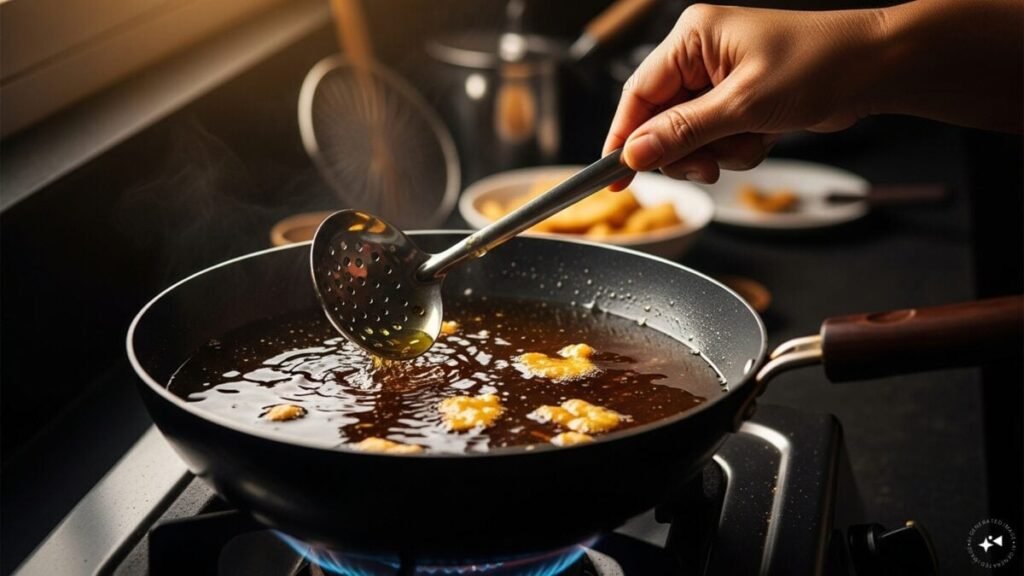
Reused cooking oil: Once you make puris, pakodas, samosas or kachori at home, a question often arises: Can the leftover oil be reused? In most homes, instead of throwing them away, they are used to prepare vegetables or other things for next time. At first glance, this method seems to save money, but repeatedly heating the oil can gradually have a negative impact on your health. Many people do not know that when the same oil is repeatedly heated over high heat, chemical changes begin to occur in it that are considered harmful to the body.
Therefore, it is important to know how long residual oil remains safe, how it should be stored and after what signs it should be disposed of without any delay.
Why is frequently heated oil harmful?
When oil is repeatedly heated at high temperatures, its structure begins to change. In this way, the oxidation process accelerates and harmful elements begin to form gradually. This is why experts repeatedly recommend avoiding eating things made with used oils. This habit is very common in daily life. Many people, after frying pakodas in the morning, cook vegetables in the same oil at night. If this happens occasionally, it is possible to reduce the risk, but it is not considered right to make it a regular habit.
1. How long is leftover oil safe?
Use it within one to two days. If for some reason you have to use the remaining oil again, first filter it well. As a result, the burnt spices and small food particles in it separate, which quickly spoils the oil. According to experts, it is best to use the remaining oil within one to two days. Aside from this, reusing the same oil just once is relatively safe. Heating the same oil over and over again increases the likelihood of spoilage.
2. The correct way to store oil
Little negligence can spoil the quality. If oil remains, store it in a completely clean and dry airtight container. Keep the pot in a place out of moisture and sunlight. If the oil is left open, it comes into contact with air, which can cause it to deteriorate quickly. Many people keep the oil covered in the pan itself. Through this, dust, moisture and other impurities can enter it. Therefore it is always better to store it in a separate container.
3. How do you know that the oil is no longer suitable for use?
Before the oil spoils, it begins to give some signals. If these signals are ignored, the same oil can reach the body through food. If the oil starts to smell bad or acrid, becomes darker than usual, begins to foam more frequently, or seems thicker than before, understand that it should not be used anymore. It is wise to get rid of this oil immediately.
Small daily habits, with a big impact
People often think that throwing away a little bit of leftover oil is a disservice, but harming the body with bad oil can be much more costly. It would be better to use the oil as per requirement only so that there is no need to keep the remaining oil again and again. Even if the oil remains, filter it properly, keep it in a safe place and use it within a limited period of time. Meanwhile, if the oil shows any signs of spoilage, don’t risk reusing it.
Small precautions adopted in the kitchen help maintain good health for a long time. Therefore, before using the remaining oil, check its quality and avoid heating it too much. This habit can be the safest option for your family’s health.