
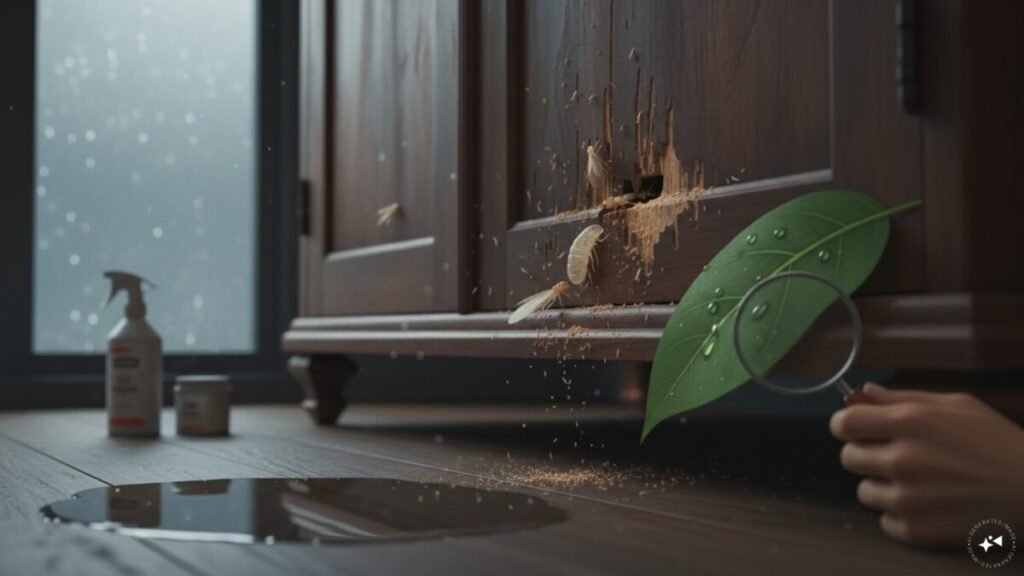
Termite Furniture: The rainy season brings relief, but with it also comes some problems that gradually start to damage the house. The biggest problem among them is termite infestation in furniture. At first this insect is not visible, so people often take it lightly, but by the time its presence is discovered, wooden furniture, doors, windows and cabinets become hollow inside. Very often the need arises to replace expensive furniture.
The good thing is that if some signs are recognized in time, the damage can be prevented to a great extent. Let us know how to identify termites in furniture, why this problem increases during rains, and if termites are found in the house, what are the easy and effective ways to get rid of them.
Why does the threat of termites increase during the rainy season?
The humidity in the air and atmosphere increases significantly during the monsoon. This moisture creates the most favorable environment for termites to thrive. If wood remains in contact with moisture for a long time, the risk of termite infestation increases dramatically. Even small things such as dampness in the walls of the house, leaking water from pipes, moisture accumulated under the floor, or lack of ventilation in closed rooms create a suitable environment for termites. Therefore, it is very important to keep the house dry and well ventilated during rainy days.
7 major signs of termites in furniture
1. Feeling empty inside when pressing on wood.
If the wood of a chair, table, cabinet or door feels weak or hollow when pressed, this could be an early sign of termites. Termites begin to eat wood not from the outside, but from the inside.
2. Thin tunnels of soil are visible
If thin, mud-like lines appear near walls, floor edges, or wood, don’t ignore them. These tunnels are the termites’ movement route.
3. The flight of the winged termite
If small winged insects are seen flying around the house in the evening during rain, this could also be a sign of the presence of termites.
4. Extracting fine sawdust from wood
If you see deposits of fine powder or sawdust under the furniture, inspect it carefully.
5. Doors or windows are not closed properly
Wood texture can be changed by termites. In such a situation, doors and windows stop opening and closing as easily as before.
6. Mild abnormal sound
In some cases, in a quiet environment, a slight sound can also be heard from within the wood. This is a sign of an active termite colony.
7. Peeling paint or coating
If bubbles start forming on the wood surface for no reason or the paint starts peeling, definitely get it checked.
What to do if there is a termite infestation?
If the problem is detected initially, some home remedies may be helpful. First, salt can be sprinkled on the affected area. The properties in salt help reduce termite activity. Many people also use neem oil and clove oil. Its strong smell is useful in keeping termites away from that place. Some people also sprinkle bitter gourd juice. Because of the bitter smell, termites try to stay away from that place. However, if termites have spread throughout the furniture or in many parts of the home, professional pest control is a better option than relying on home remedies.
Easy ways to avoid termites
Do not allow water to accumulate around the house and repair any type of water leaks immediately. If there are cracks in walls, floors and foundations, fill them immediately so termites cannot enter. Keep wooden furniture polished or sealed from time to time. This increases the safety of the wood. Avoid piling old boards, wood waste, or firewood around the house. Allow enough sunlight and air into the rooms so that humidity remains low.