

Latest update:
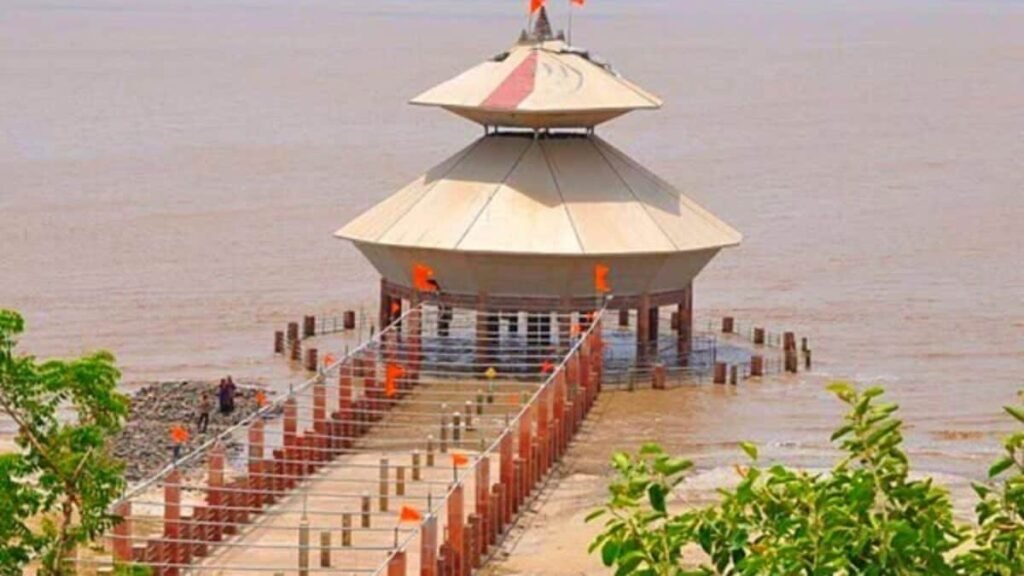
In Gujarat, the path leading to the Stambeshwar Mahadev Temple completely disappears under the sea during high tide before reappearing hours later.




News18
There is a temple in India where timing matters more than distance. Because if visitors arrive at the wrong hour, the road itself may not exist.
The Stambheshwar Mahadev Temple is located near the coast of Bharuch district in Gujarat, in a location so close to the Arabian Sea that the entire approach road and surrounding area disappears under water during high tide – only to reappear when the sea recedes.
For a few hours every day, the temple almost completely disappears under water.
Then he comes back.
This phenomenon has made Stambeshwar one of the most unusual religious sites in India and one of the strangest natural landscapes in Gujarat. According to the Gujarat Tourism Board, the temple is located about 1.5 km in the sea near Kavi Kambhoi village, causing tidal movements that regularly sweep over the path and the shrine.
So visitors plan their trips according to tidal schedules rather than regular business hours.
During low tide, devotees and tourists can walk through the open path towards the temple. But as the water level rises, the sea gradually swallows the road, the surrounding platform and eventually the building itself.
At high tide, almost nothing remains visible except the water stretching across the coast.
Locals have watched this cycle for generations.
According to temple tradition, the site is believed to be associated with ancient Hindu mythology associated with Lord Shiva and the demon Tarakasura. Some versions of local beliefs trace the origins of the temple back thousands of years, although the current structure has been rebuilt and renovated several times over the centuries due to constant exposure to the tides.
The sea dominates life around the temple.
Unlike normal coastal flooding, this inundation is predictable, rhythmic, and entirely controlled by tidal cycles in the Gulf of Khambhat, one of the most extreme tidal zones in India. The bay is known for its unusually strong tidal movements due to its funnel-shaped geography, which amplifies incoming seawater.
It is possible that the water level in parts of the Gulf will rise significantly within short periods. This creates a surreal visual transformation experience for visitors at Stambheshwar.
Pictures taken just hours apart can look like completely different places, with one showing pilgrims calmly walking towards the shrine, while the other shows the open sea where the road once existed.
The disappearance of the tides has also turned the temple into a growing tourist attraction.
Videos of the vanishing temple regularly circulate online, especially during monsoon seasons and high tide events. Tourism campaigns in Gujarat have increasingly promoted the site for its unusual combination of religion, geography and landscape.
However, despite the recent interest, the place still looks strangely old.
There are no dramatic gates or huge urban complexes surrounding the temple. Instead, visitors wait quietly near the shore and watch the sea advance and recede, fully aware that nature is temporarily controlling access to the beach.
Perhaps this is what makes Stampeshwar so memorable.
In a country full of iconic highways and gigantic infrastructure, one of India’s most extraordinary roads disappears under the ocean twice every day – as if the sea briefly decides to reclaim it before bringing it back again.
About the author

The team of writers at News18.com bring you stories about what’s buzzing on the internet while exploring science, cricket, technology, sex, Bollywood and culture.
Read more