

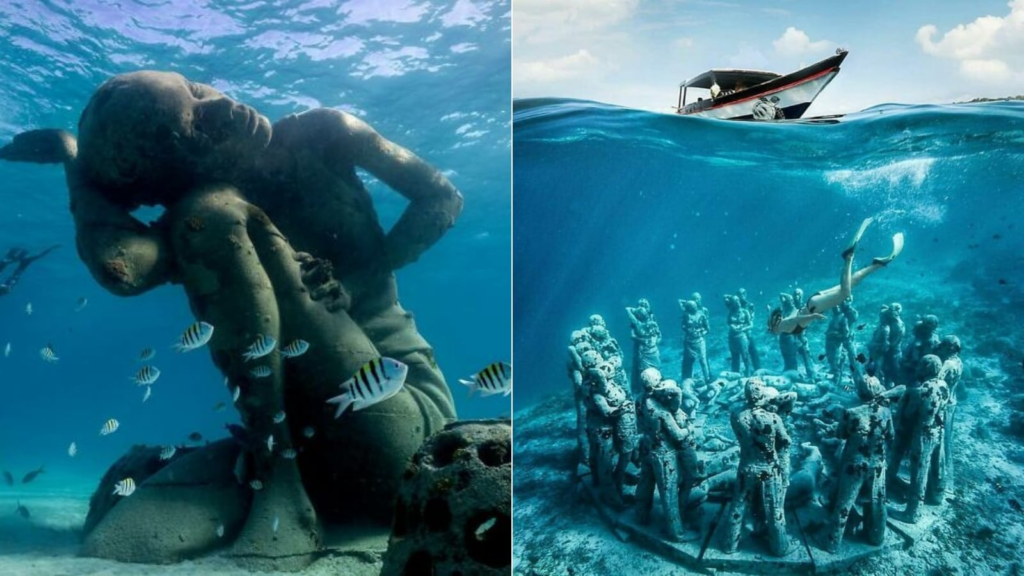
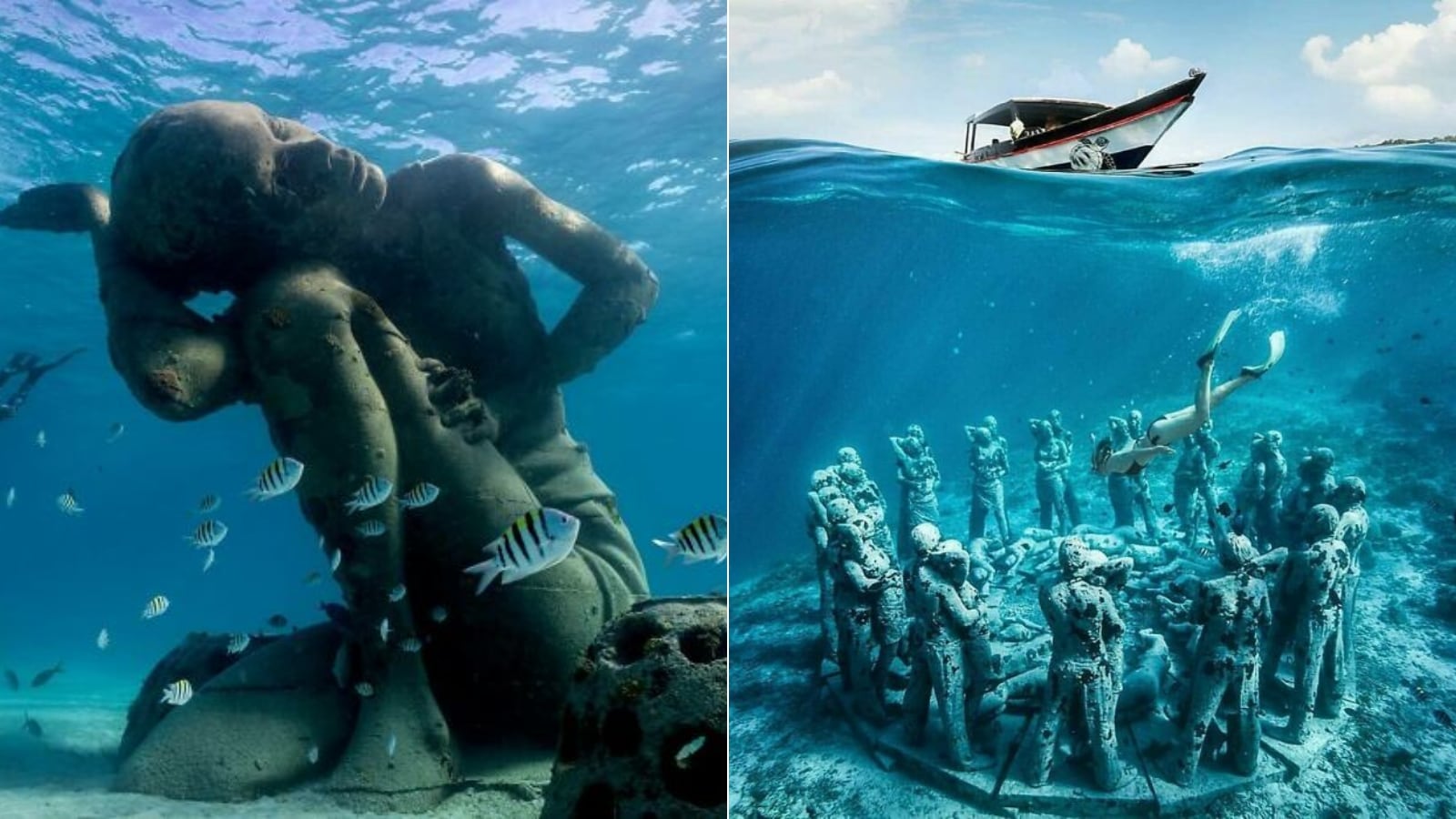
British artist Jason De Caires Taylor pioneered the world’s first underwater sculpture park, creating installations that function as public art and artificial reefs. Over the past two decades, he has created more than 1,200 public sculptures around the world, attracting thousands of visitors each week. His sculptures, built with environmentally friendly materials, help coral grow while attracting fish, lobsters and other marine life. (Photo by Jason Deckers)
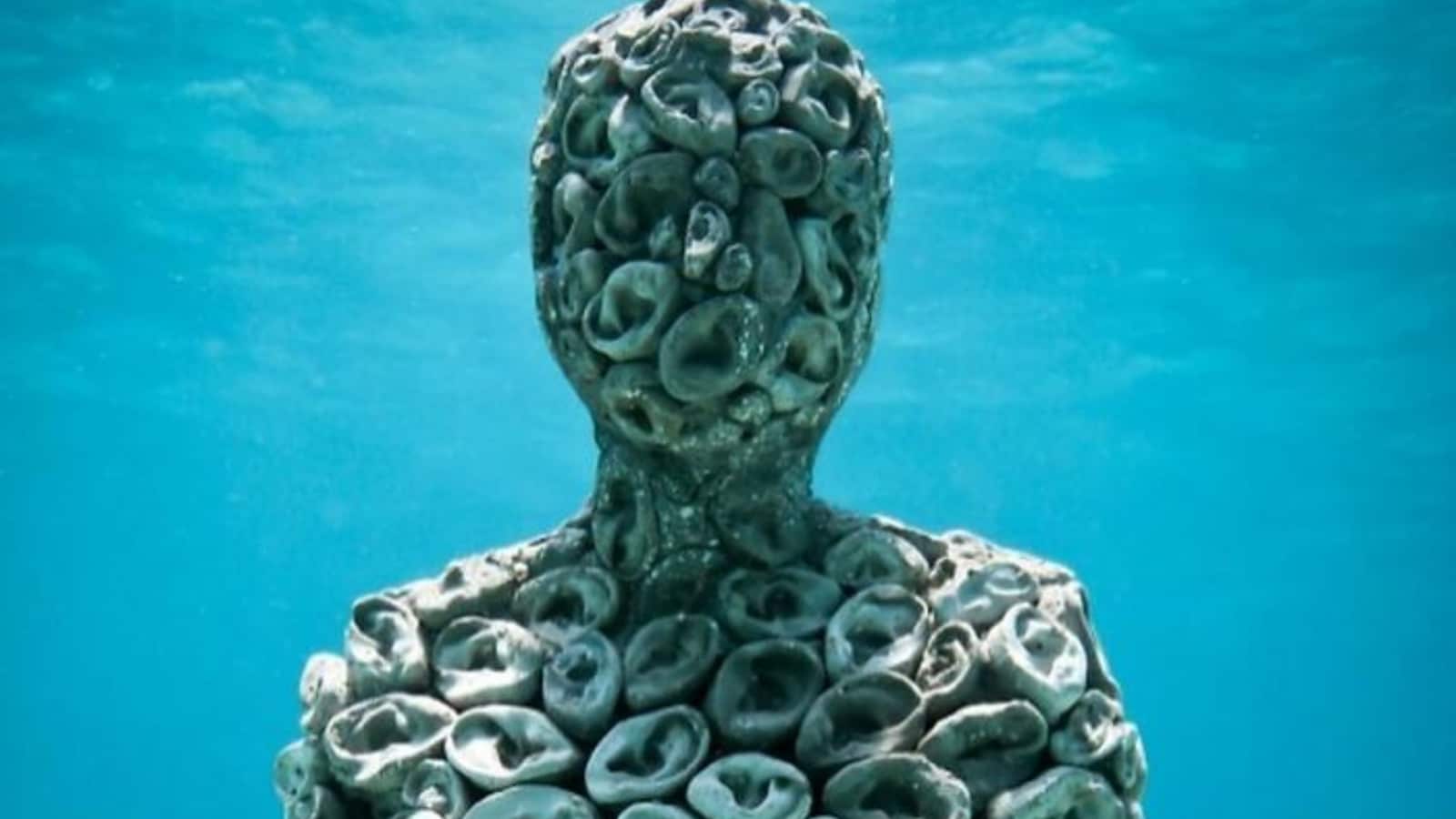
In Cancun, the Listener features earmolds made by local school children. Inside are recording devices that capture underwater sounds, helping scientists study marine life while encouraging local communities to take an interest in protecting the reef. (Photo by Jason Deckers)
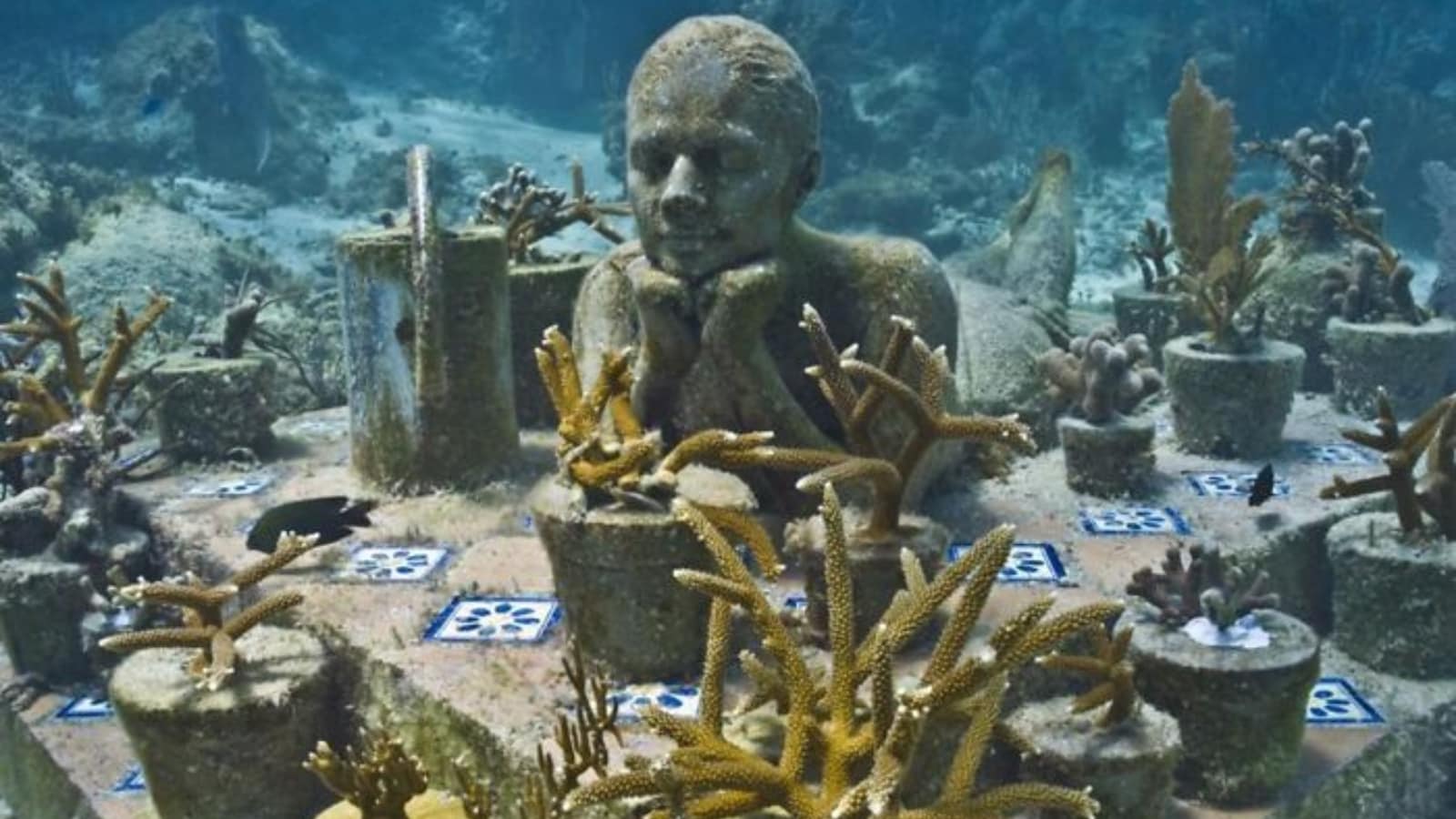
The Gardener of Hope, located in Mexico, shows a young girl surrounded by pots filled with coral. The spaces embedded in the sculpture provide shelter for snakes, fish and lobsters, symbolizing harmony between people and the natural world. (Photo by Jason Deckers)
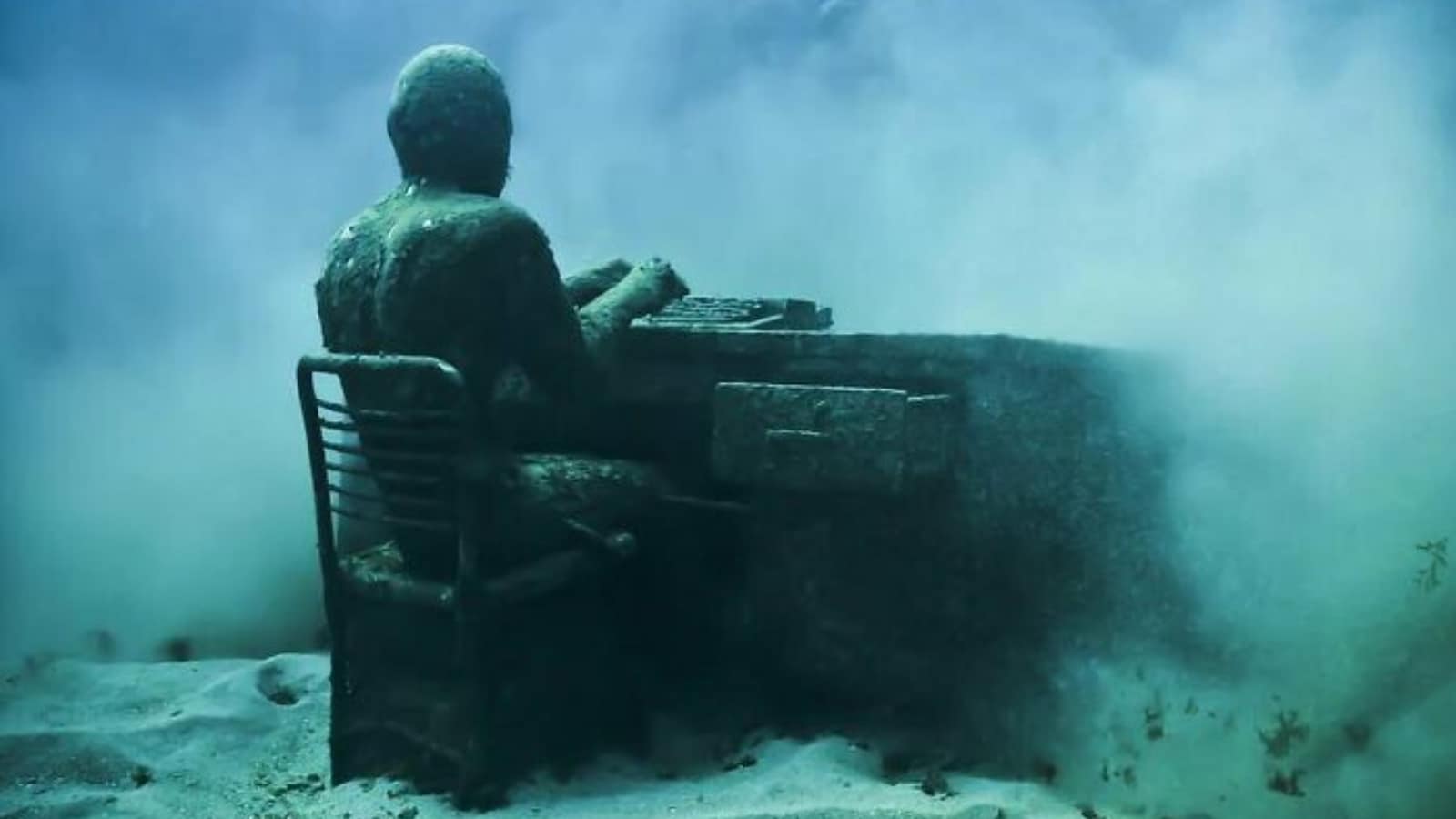
Installed in Grenada, The Lost Correspondent depicts a man sitting at a desk covered in old newspaper clippings. The statue reflects the changing nature of communications and retains memories of the island’s pre-revolution past. (Photo by Jason Deckers)
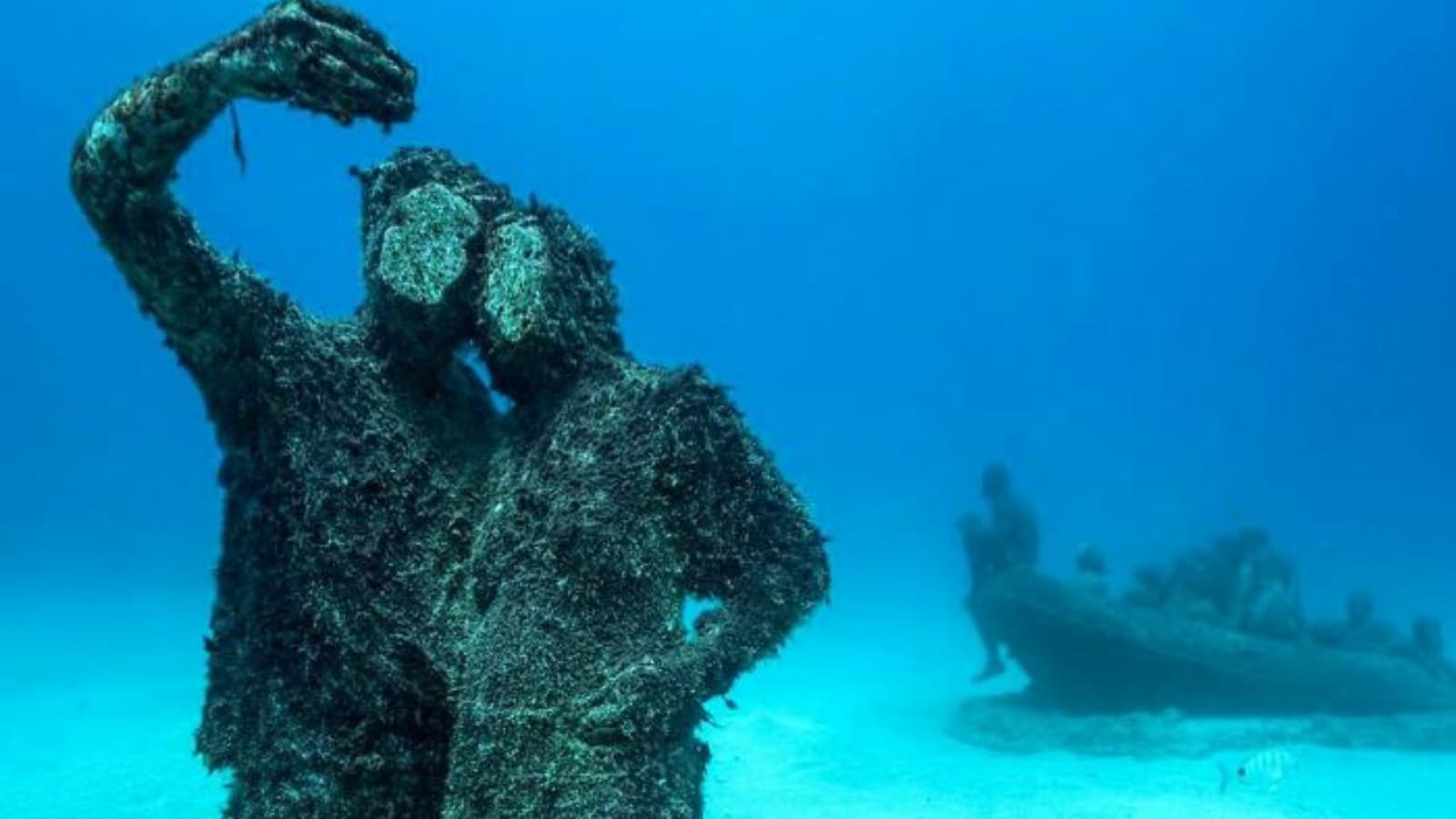
Off the coast of Lanzarote, Crossing The Rubicon features 35 human figures walking towards an entrance in an underwater wall. This stunning installation highlights the climate crisis and warns that time for action may be running out. (Photo by Jason Deckers)
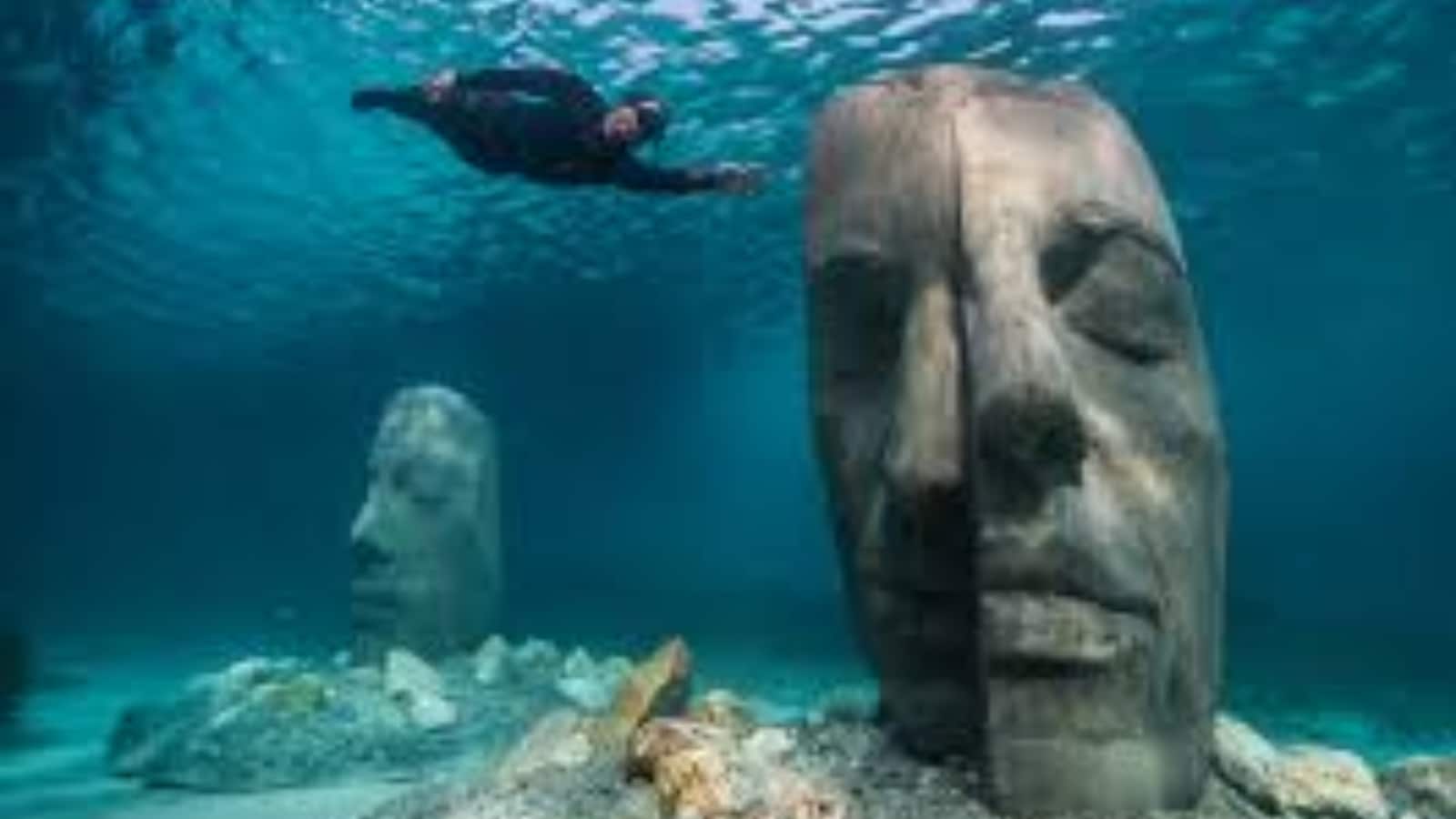
The Masks of Île Sainte-Marguerite, located near Cannes, consists of six giant sculptures that each weigh about 10 tons. Designed like an artificial coral reef, the sculptures provide safe habitats for fish, coral and other underwater species. (Photo by Jason Deckers)
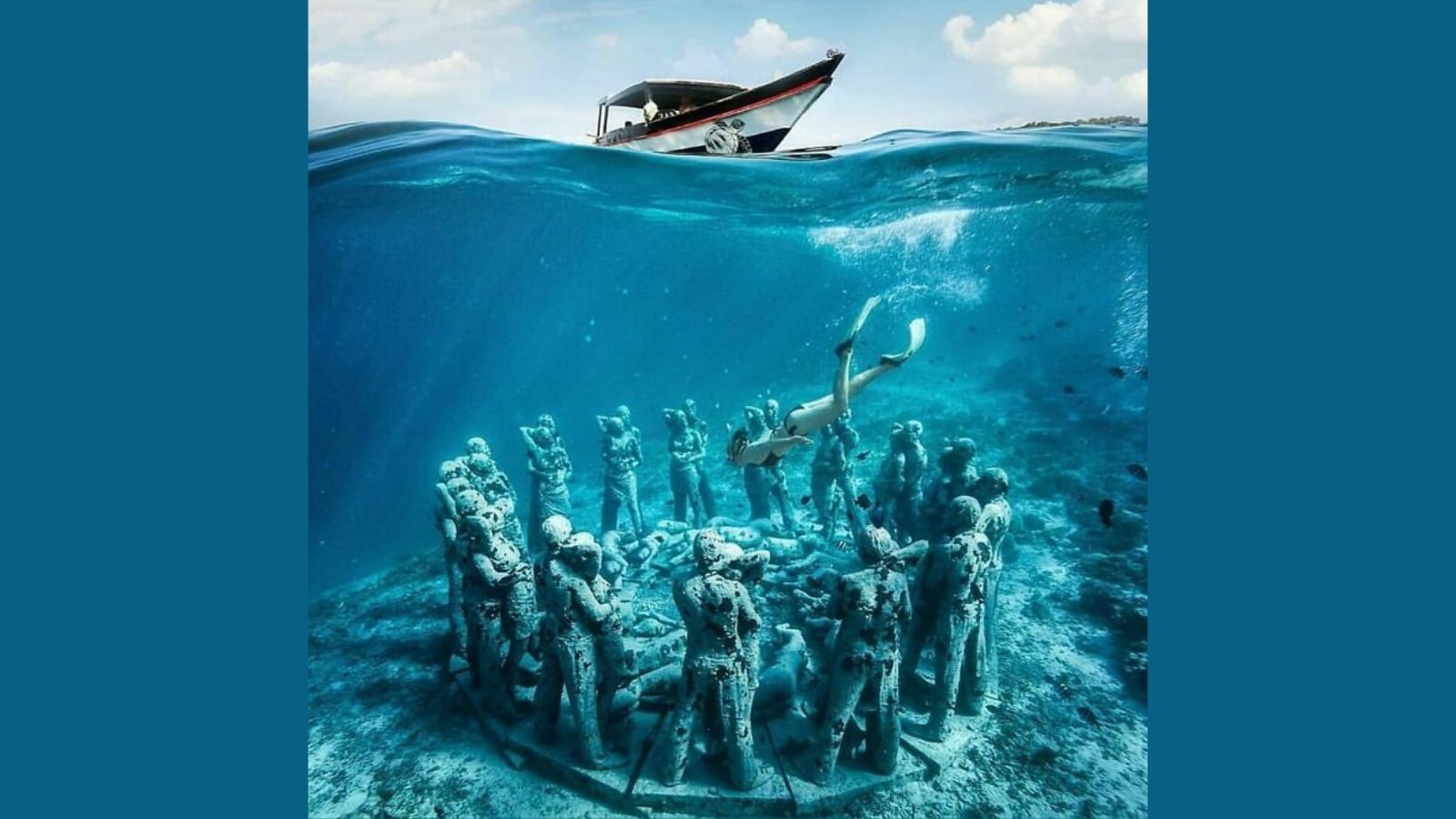
Near Gili Meno, Nest features 48 life-sized figures arranged in a circle on the sea floor. The installation draws attention to the disappearance of coral reefs while giving marine organisms a surface to settle and grow. (Photo by Jason Deckers)
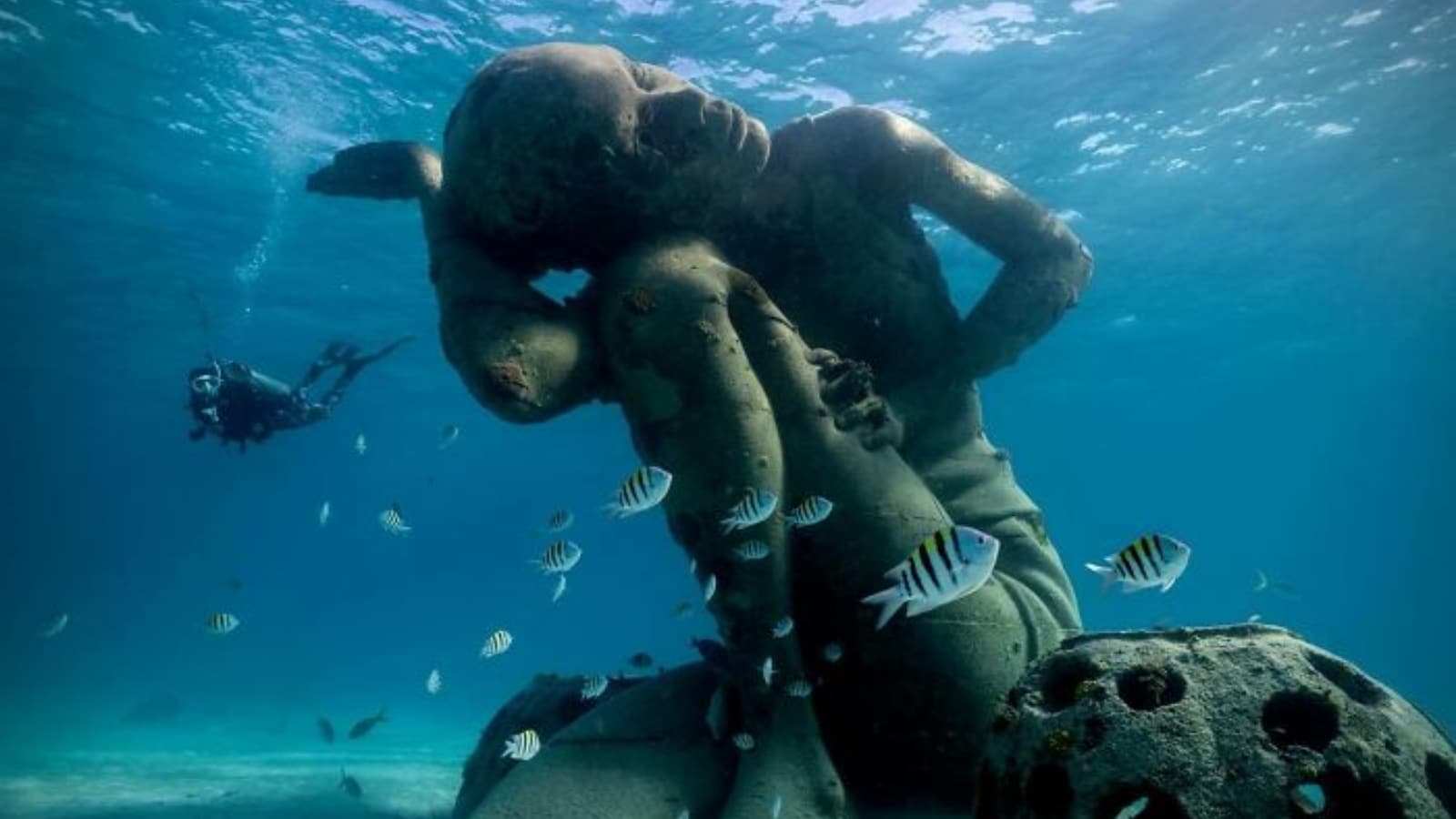
In Nassau, the Ocean Atlas shows a young Bahamian girl supporting the ocean on her shoulders. Weighing more than 60 tons, it is one of the largest underwater sculptures in the world and symbolizes the environmental burden on future generations. (Photo by Jason Deckers)
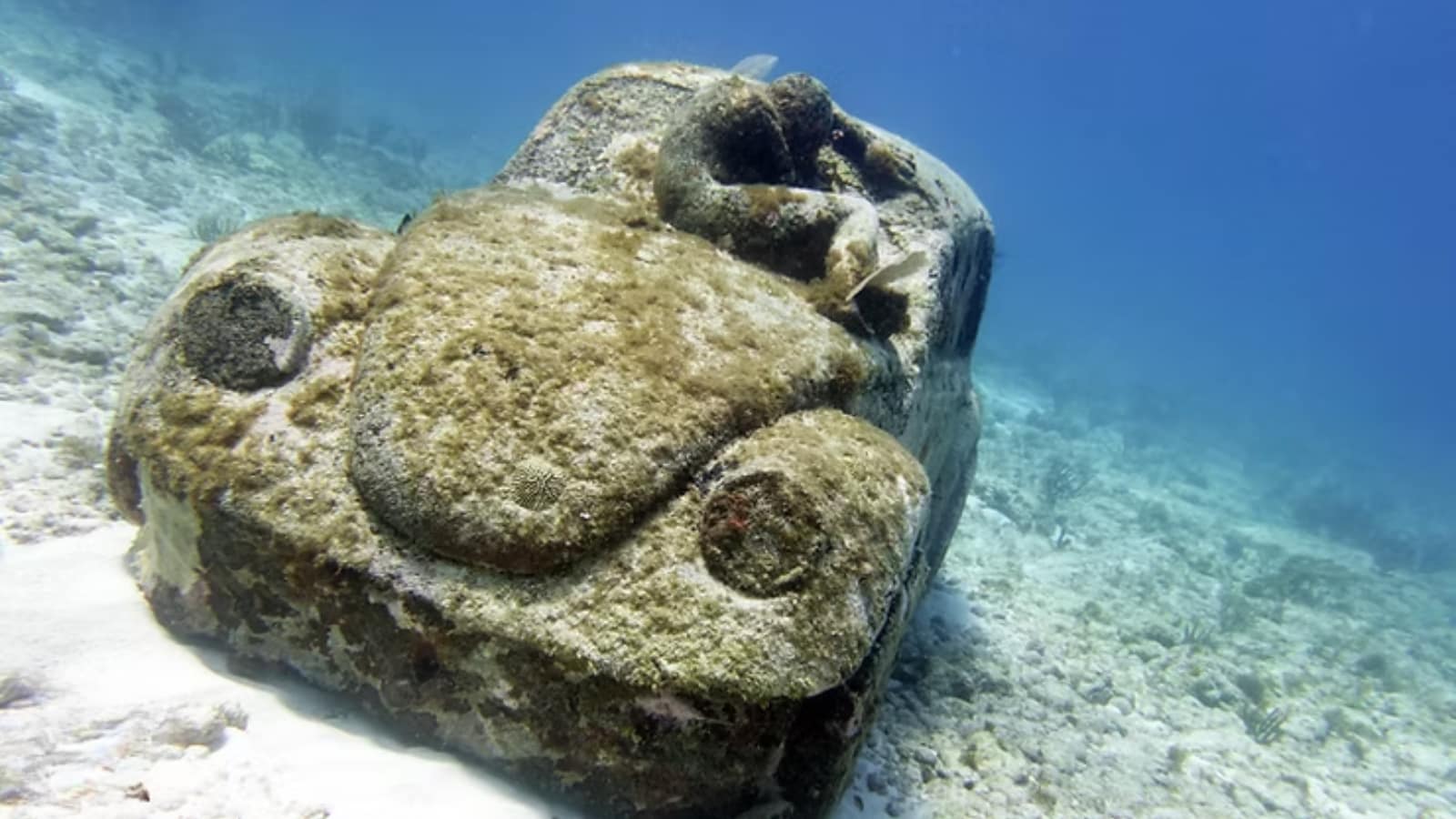
The Anthropocene, installed in Mexico, shows a submerged cast of a Volkswagen Beetle with a sad child draped over its windshield. This powerful sculpture reflects the environmental legacy it will leave for future generations, while also serving a practical purpose as a shelter for lobsters and other crustaceans. Its thick concrete structure was specially designed to protect the marine life living inside from being caught by fishermen’s tools. (Photo-Audrey Noirot)