Latest update:
He failed seventh grade and dropped out of school, but with instinct, inherited wisdom, and patience he achieved what many scientists spend years in laboratories trying to accomplish.



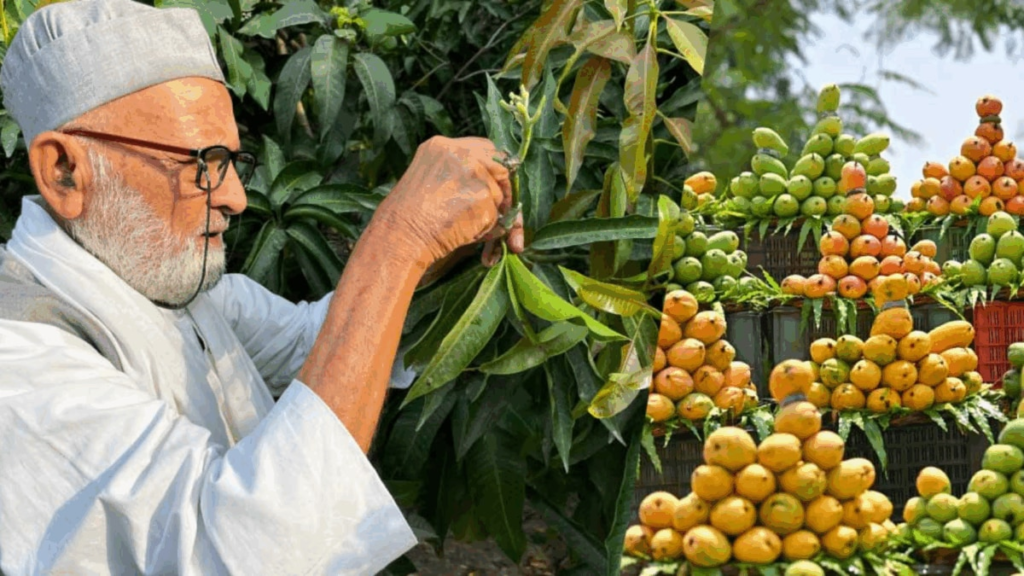
Padma awardee Kaleemullah Khan has grafted multiple varieties of mango on a 125-year-old tree spread across his 22-acre orchard in Malihabad, Uttar Pradesh. (Photo: hajikaleeemallahkhan.in)
Most scientists spend years in classrooms and laboratories, but Kalimullah Khan built his legacy in a mango orchard. Born on January 1, 1945 in Malihabad, Uttar Pradesh, India’s famous mango region, Kalimullah never expected to become a horticultural icon.
He failed the seventh grade, left school, and began spending his days in his family’s orchard. But what he lacked in formal education, he made up for with common sense, patience and an unusual idea: Can a single tree grow hundreds of different mangoes?
This question made him one of the most famous horticulturists in India. Kaleemullah Khan, known as the “Indian Mango Man”, is the creator of one of the world’s most amazing live experiences. The 125-year-old mango tree bears more than 300 varieties of mangoes, and he was also awarded the Padma Shri in 2008.
How did it all start?
Kalimullah’s journey began when he was a child, among the mango orchards that his family had nurtured for generations. After his grandfather died, he took over the responsibility of tending the orchard and gradually discovered his true calling.
In 1957, he undertook his first ambitious experiment, trying to grow seven varieties of mango on a single tree. But nature had other plans. Severe floods destroyed the tree.
But instead of giving up, treat failure as a lesson. This setback taught him more about soils, floods, and plant survival, and pushed him to delve deeper into the science of grafting.
The technology behind the miracle
At the heart of Kalimullah Khan’s success lies grafting, an ancient agricultural technique in which branches from one plant are attached to the roots of another so that they grow together.
Over decades of trial and error, he perfected the art. In 1987, he began grafting multiple mango varieties onto a single old tree spread across his 22-acre orchard in Malihabad. Slowly, branch by branch, the tree transformed into a botanical marvel.
Today, the nearly nine-metre-tall tree bears more than 300 different varieties of mango, each retaining its own flavour, colour, aroma and texture – all from a single root system.
A tree unlike any other
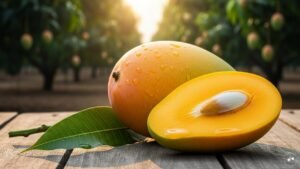
The tree features some of India’s most popular mango varieties, including Alphonso, Langra, Kesar, Deshiri, and Chusa. It also carries unique hybrids developed by Kalimullah and his family, including the Doshehri Kaleem, which is a cross between Doshehri and Sindoori.
Some items have been given unusual names inspired by public figures and figures, reflecting his creativity and personal connection to his work.
Recognition without a degree
Although he never received any formal degree, Kalimullah Khan’s work has been recognized globally. Former president KR Narayanan once described him as a scientist without a college degree, after he donated a special mango tree bearing 54 varieties to the Rashtrapati Bhavan Mughal Gardens in New Delhi.
His record-breaking tree, known as the “Decider”, earned him a place in the Limca Book of Records.
Delegations from countries including the United States, Germany, the United Kingdom, Thailand, Saudi Arabia and Jamaica have visited his orchard to study his methods.
Despite international recognition, Kalimullah Khan remained firmly rooted.
For years, even after he became famous, he continued to work quietly in his orchard, devoting himself to the soil and trees that had shaped his life.
Today, his son helps maintain the family’s 22-acre orchard, carefully monitoring weather conditions, pest control and irrigation to preserve the legendary tree.
The 81-year-old Kalimullah Khan orchard is not just farmland; It is a living laboratory, a place where tradition meets innovation.
His story proves that genius doesn’t always come from textbooks. Sometimes, they grow slowly, branch by branch, season after season, on an ancient mango tree in the heart of Uttar Pradesh.
Read more